

 Orders
 Addresses
 Payment methods




Details
| Product number: | CH202101 pdf |
|---|---|
| Arrangement: | Ensemble |
| Genre: | Barock |
| Era: | 1600 1750 |
| Ensemble: | Mixed ensemble |
| Difficulty: | Medium |
| Language: | German |
| Authors: | Hammerschmidt , Andreas (1611-1675) |
| Pages: | 234 |
| Publisher: | Verlag C. Hofius |
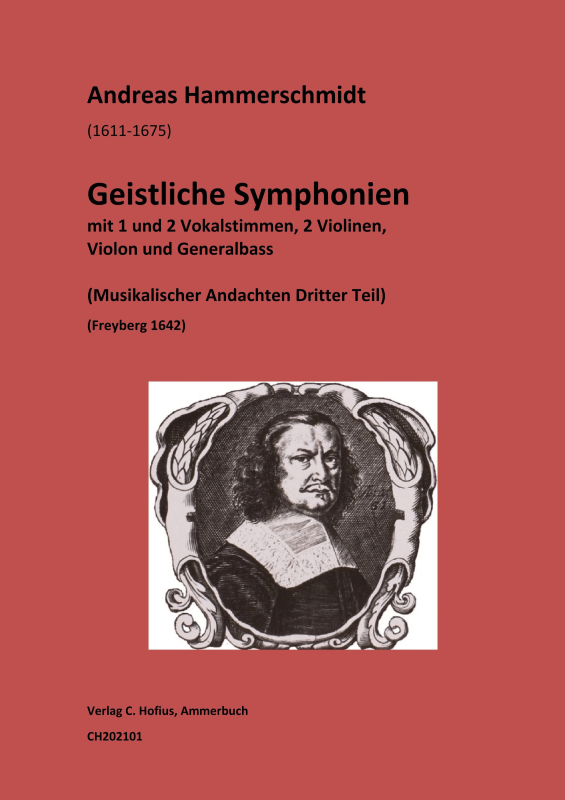
Musikalische Andachten III. Teil: Geistliche Symphonien - Sheet Music for Mixed ensemble 1-2 vocal parts, 2 violins, violon and BC Andreas Hammerschmidt








 100% Legal & Licensed
 Verified by Musicians
 No Subscription. One-Time Purchase.
 Instant Download after Purchase
Details
| Product number: | CH202101 pdf |
|---|---|
| Arrangement: | Ensemble |
| Genre: | Barock |
| Era: | 1600 1750 |
| Ensemble: | Mixed ensemble |
| Difficulty: | Medium |
| Language: | German |
| Authors: | Hammerschmidt , Andreas (1611-1675) |
| Pages: | 234 |
| Publisher: | Verlag C. Hofius |
Product Description
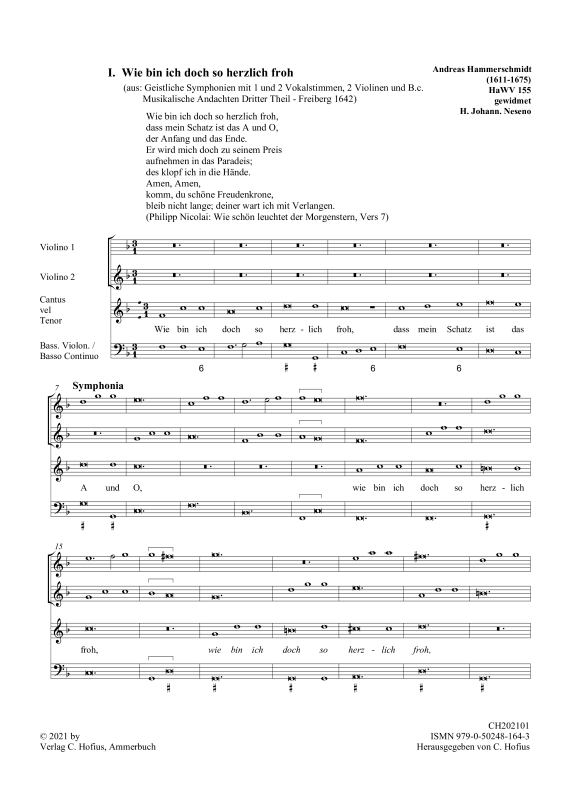
Andreas Hammerschmidt's "Musikalische Andachten III. Teil" ranks among the most significant sacred vocal-instrumental works of the German early Baroque. The score is aimed at ensemble players with approximately four or more years of study who bring experience in Baroque voice leading and continuo-based ensemble playing. The scoring calls for one to two vocal parts, two violins, violone, and basso continuo.
Ensemble Score "Musikalische Andachten III. Teil: Geistliche Symphonien" – Early Baroque Vocal-Instrumental Writing
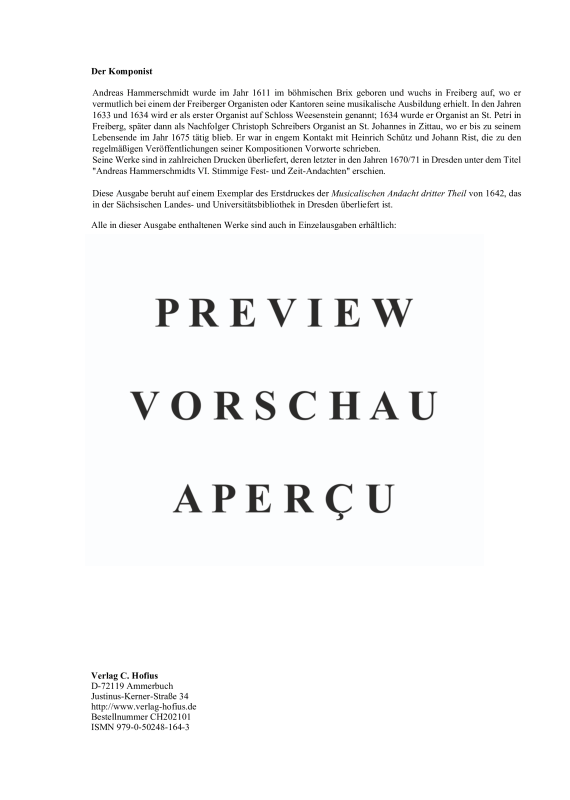
Andreas Hammerschmidt was born in 1611 in Brix, Bohemia, and served as organist in Freiberg and Zittau from 1634 until his death in 1675. He maintained close ties with Heinrich Schütz and Johann Rist, both of whom contributed prefaces to his collections. The third part of the "Musikalische Andachten" was published in Freiberg in 1642 and survives today in its first edition at the Sächsische Landes- und Universitätsbibliothek Dresden.
This collection brings together sacred symphonies in which vocal parts and strings engage as equal partners in dialogue — no part functions as mere accompaniment. The basso continuo provides the harmonic foundation, while the violins and voices pick up phrases and carry them forward. The tempo moves with a calm, flowing quality; the energy lies not in rhythmic density but in the interplay between the parts. Legato playing across all voices is not simply one stylistic device among many — it is the defining sonic ideal of this music.
Since there are no particular technical stumbling blocks that stand out, the real challenge lies in ensemble coordination: clean handoffs of phrases between voice and violin above all require a shared sense of breathing within the group. A useful approach is to sing or play through the pieces without continuo first — this makes the melodic arc of each part audible before the harmonic foundation is added. The understated energy of this music calls for an even, unhurried tone production: legato and controlled breath flow take precedence over volume or accentuation.
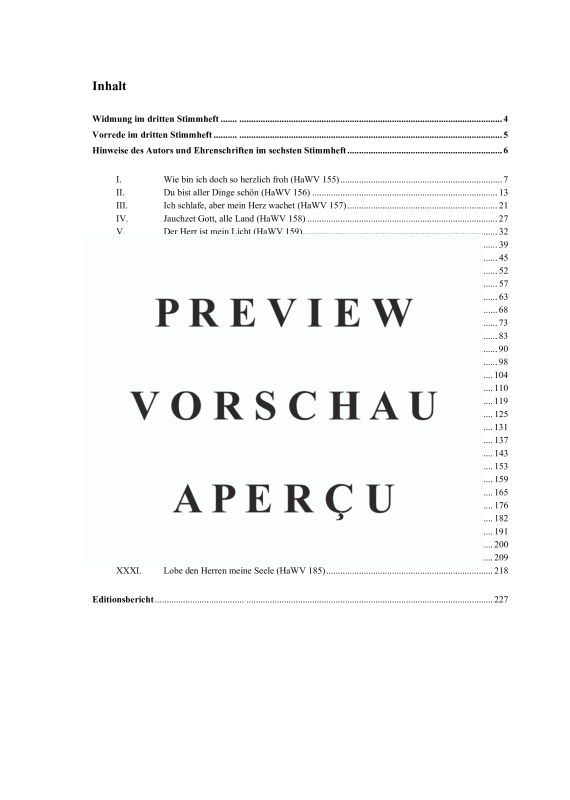
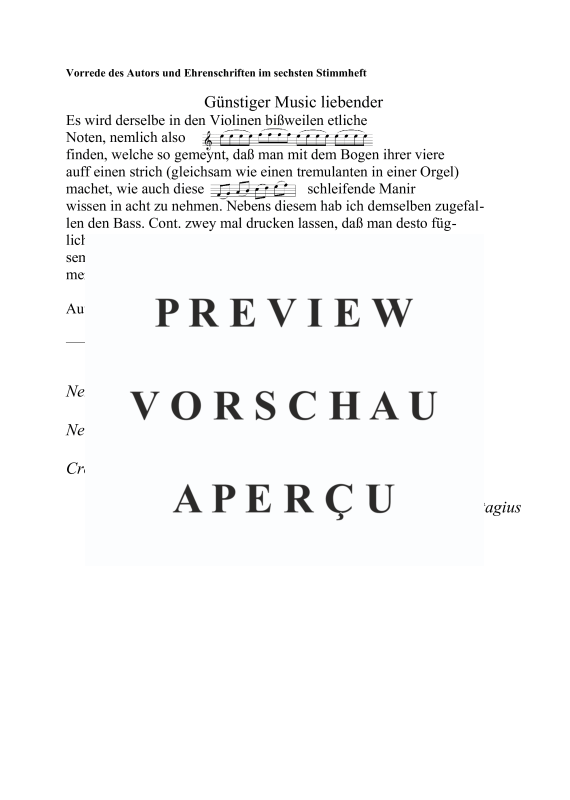
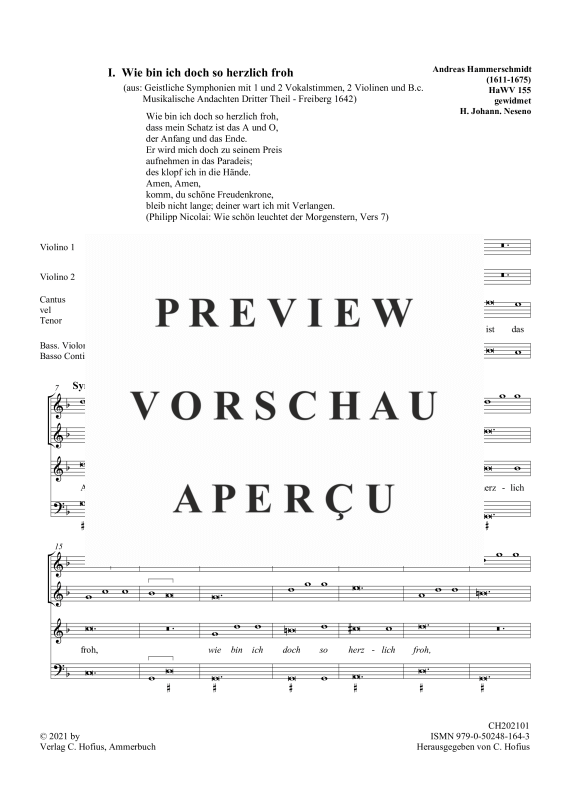
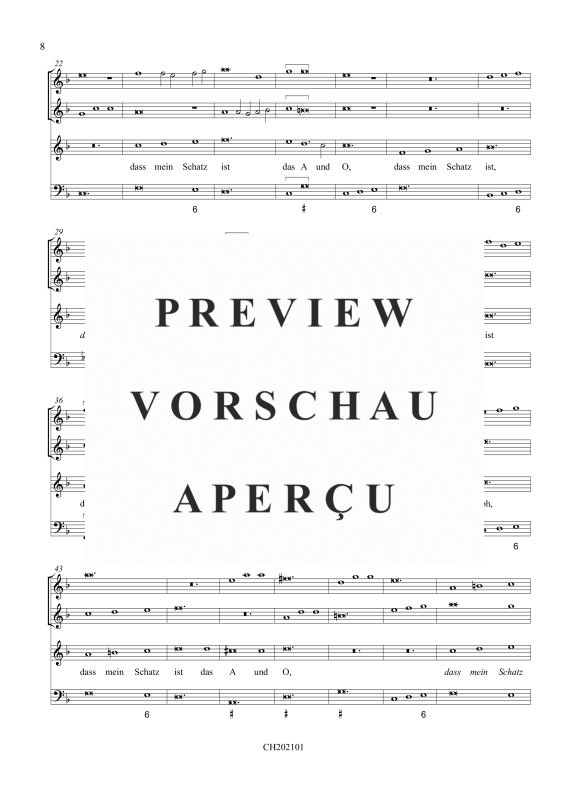
Before purchasing, all 234 pages of this edition can be viewed in the browsable score preview — giving you a complete overview of every piece included. The score is available for immediate download after purchase. 100% licensed — ready to perform legally, right away.
Editorially reviewed by the notendownload.com team