

 Orders
 Addresses
 Payment methods



Details
| Product number: | mfgt085 pdf |
|---|---|
| Arrangement: | Orchestra |
| Genre: | Barock |
| Era: | 1600-1750 |
| Orchestra: | String orchestra |
| Authors: | Scarlatti, Alessandro (1660-1725) |
| Pages: | 31 |
| arrangers: | Tailleferre , Germaine |
| Publisher: | Musik Fabrik Music Publishing |
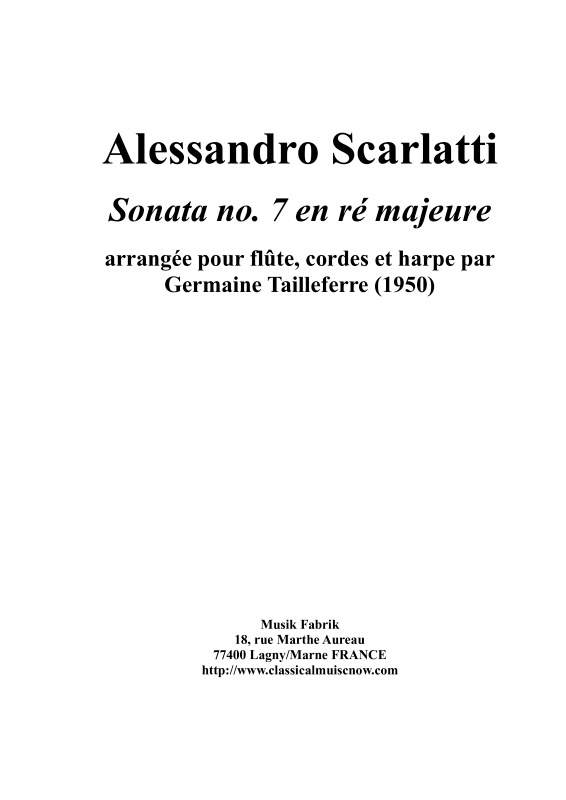
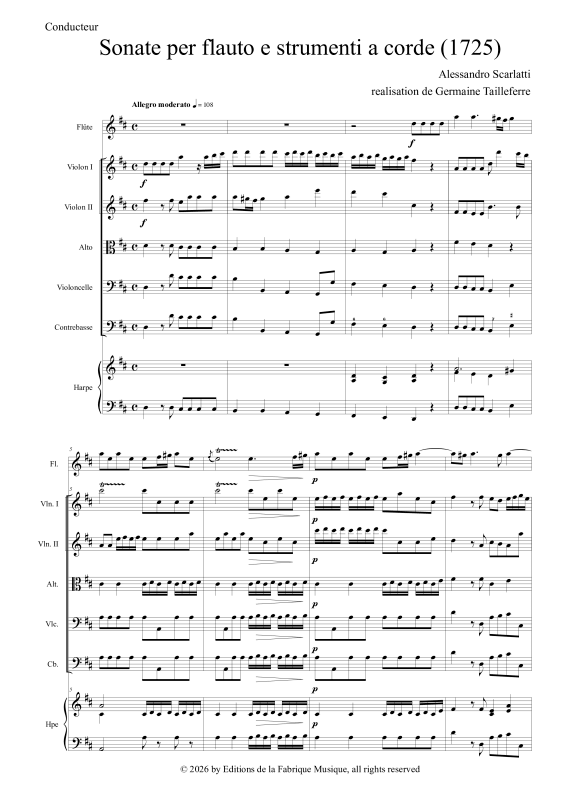
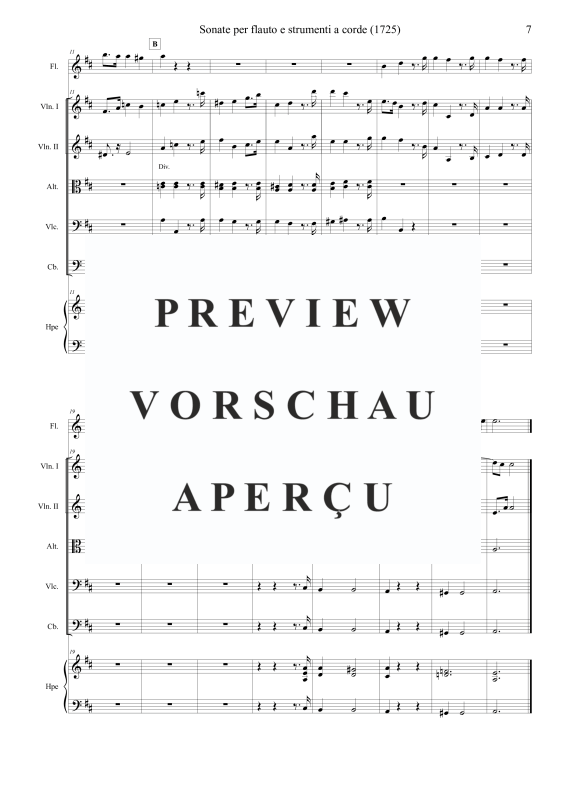
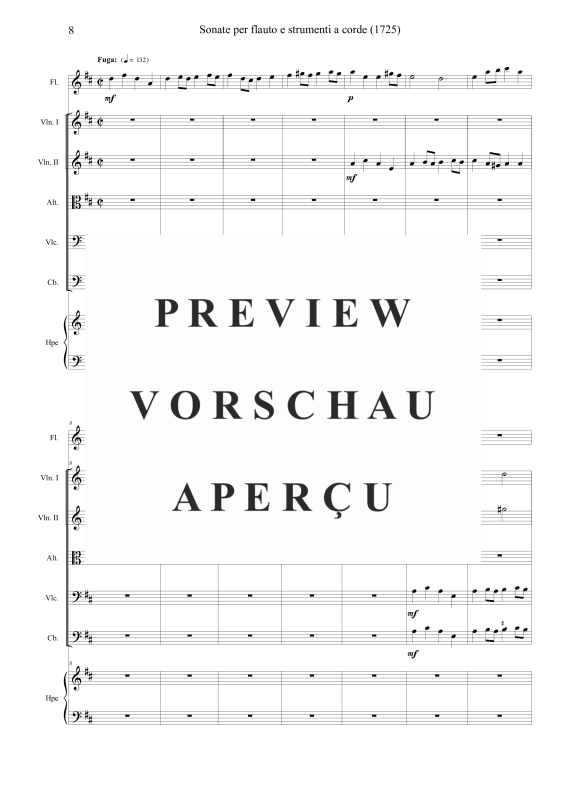
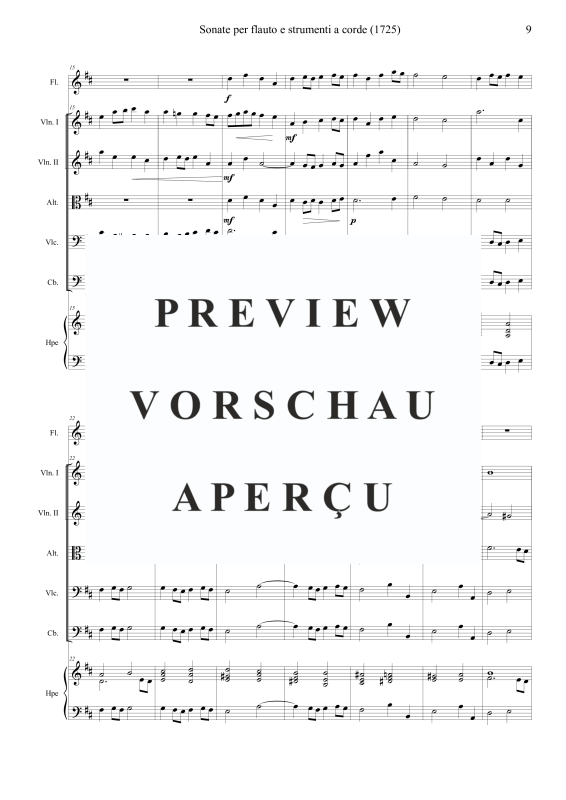
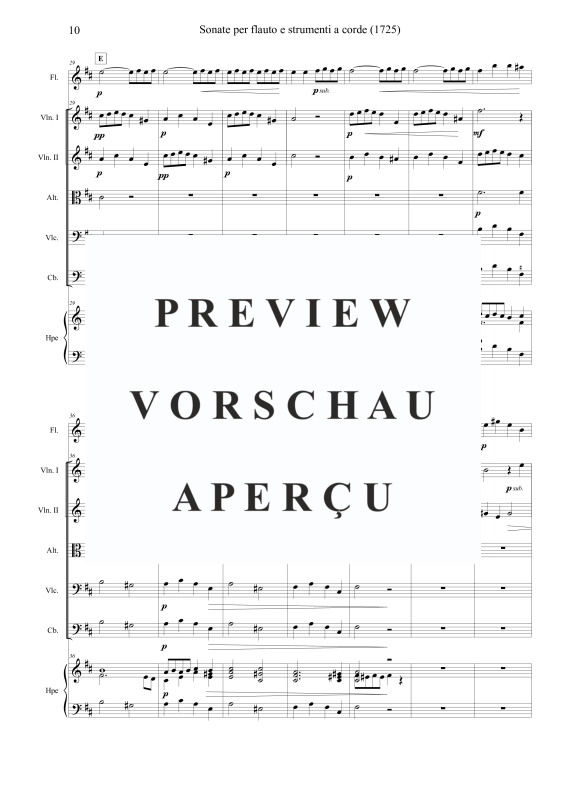
Sonata 7 in D major - Sheet Music for Flute, Harp and String Orchestra Alessandro Scarlatti








 100% Legal & Licensed
 Verified by Musicians
 No Subscription. One-Time Purchase.
 Instant Download after Purchase
Details
| Product number: | mfgt085 pdf |
|---|---|
| Arrangement: | Orchestra |
| Genre: | Barock |
| Era: | 1600-1750 |
| Orchestra: | String orchestra |
| Authors: | Scarlatti, Alessandro (1660-1725) |
| Pages: | 31 |
| arrangers: | Tailleferre , Germaine |
| Publisher: | Musik Fabrik Music Publishing |
Product Description
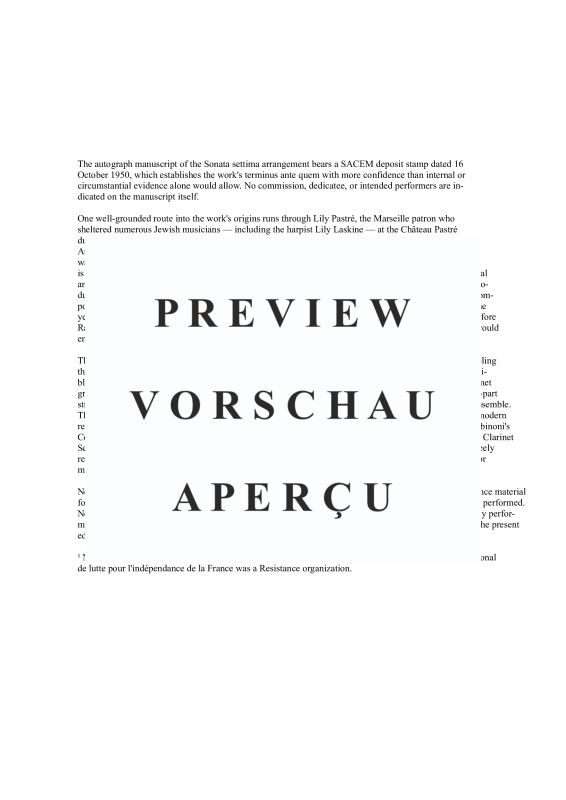
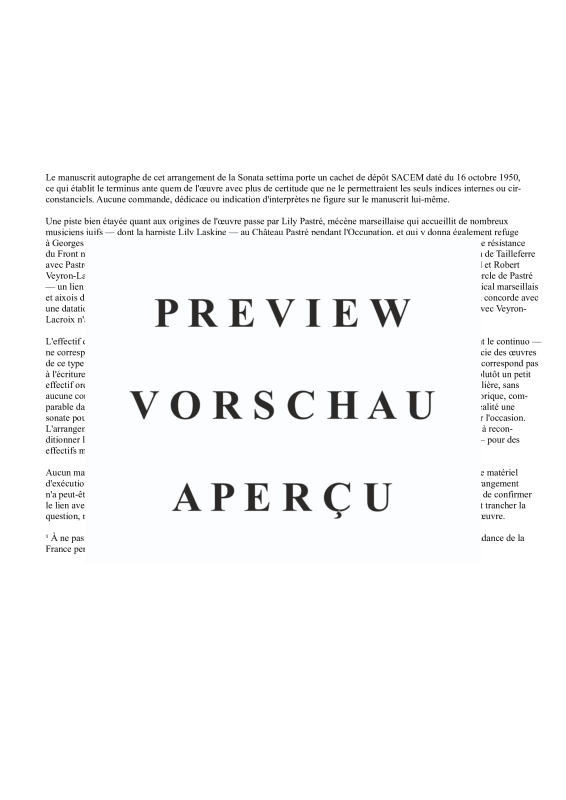
The autograph manuscript of the arrangement of the "Sonata settima" bears a SACEM deposit stamp dated October 16, 1950, which establishes the "terminus ante quem" of the work with greater certainty than would be possible through internal or indirect evidence alone. The manuscript itself contains no record of a commission, dedicatee, or intended performers.
A substantive approach to researching the work's genesis leads through Lily Pastré, the Marseille patron who, during the Occupation, housed numerous Jewish musicians—including harpist Lily Laskine—in Château Pastré and also provided refuge for Tailleferre's colleague from the "Les Six" group, Georges Auric, while he worked for the Resistance movement "Front National." ¹ After the war, Pastré was among the founding patrons of the Festival d'Aix-en-Provence. Tailleferre's own connection to Pastré is directly documented: her "Concertino" for flute and piano with orchestra, premiered in 1953 by Jean-Pierre Rampal and Robert Veyron-Lacroix, is dedicated to Pastré. Rampal reportedly met Tailleferre through Pastré's circle—a connection confirmed by the dedication of the "Concertino"—thereby embedding both composer and flutist in the same musical network of postwar Marseille and Aix, which Pastré cultivated in the years immediately after the war; this is consistent with the creation date of the present arrangement in 1950, well before Rampal's international career and his collaboration with Veyron-Lacroix achieved the prominence they would enjoy later in that decade.
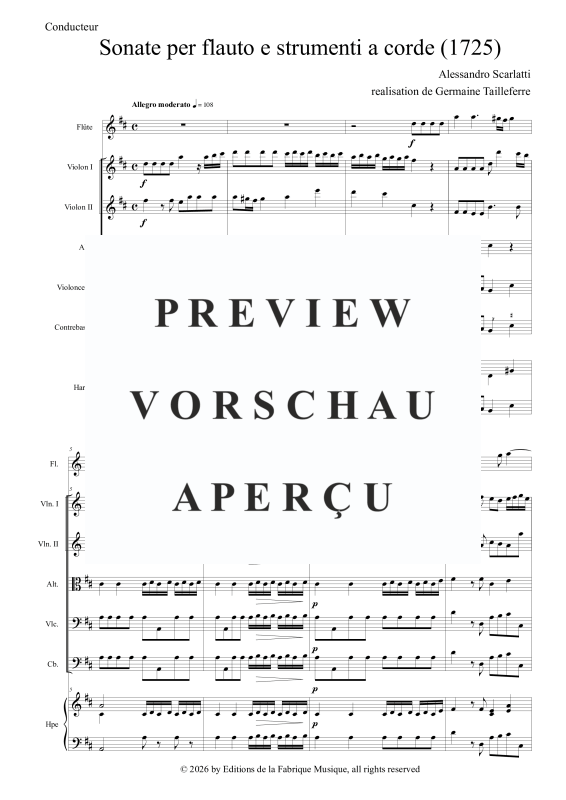
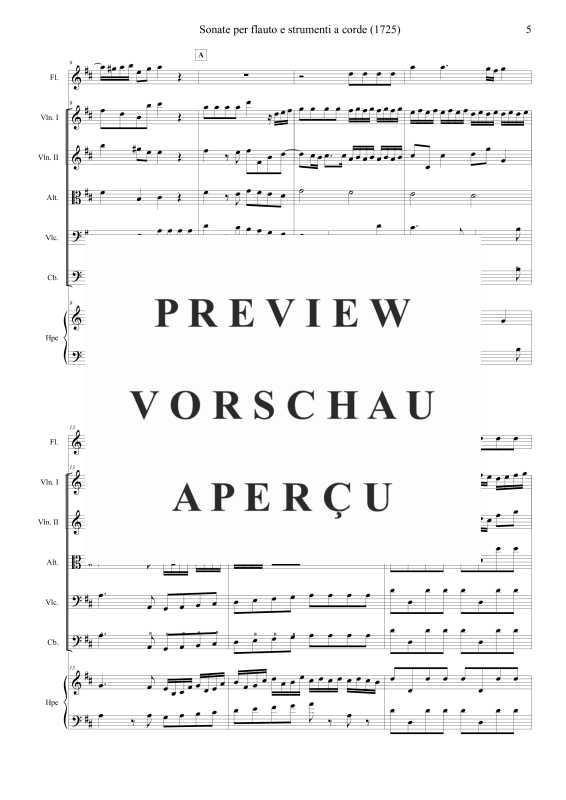
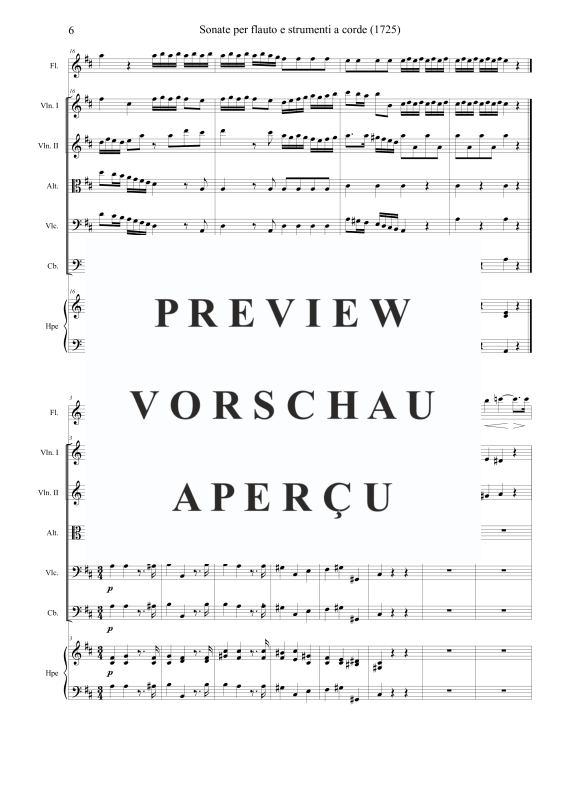
The instrumentation of the "Sonata settima"—flute, two violins, viola, cello, and double bass, with pedal harp doubling the continuo part—corresponds to no fixed chamber ensemble of the period. Robert Shapiro's bio-bibliography (1994) has connected works of this type with the Pierre-Jamet Ensemble; however, the typical instrumentation of the Jamet group—flute, string trio, and harp—does not fit the five-part string scoring of the "Sonata settima," which rather suggests a small string combination than a fixed chamber ensemble. The harp part is consistently written for pedal harp, without regard to Baroque continuo practice—a modern re-orchestration rather than a historical realization, comparable in spirit to Maurice André's 1961 recording of Albinoni's "Concerto San Marco," which is a violin sonata (op. 6 no. 11) newly orchestrated for trumpet and an ad hoc "Paris Clarinet Sextet." The arrangement of the "Sonata settima" appears to stem from the same mid-century French practice of freely recasting Baroque material—in this case a sonata attributed to anonymous or multiple authors ("diversi autori")—for modern instrumental combinations.
No performance materials have survived beside the manuscript. Given Tailleferre's habit of preserving performance materials for works that reached rehearsal or broadcast, this absence suggests that the arrangement may never have been performed. No correspondence or other documentary sources have been found that could confirm a connection to Rampal or a performance history; access to Rampal's own papers, which might have clarified this question, was not possible. The present edition is therefore to be understood as the probable premiere of the work.