 Orders
 Addresses
 Payment methods




Details
| Product number: | 7070153 pdf + mp3 |
|---|---|
| Arrangement: | Duet |
| Instruments: | Guitar , Piano , Vocal |
| Genre: | Christmas Pop |
| Duet: | Piano, Voice & Guitar |
| Difficulty: | Medium |
| Experience: | Elementary (3–4 years) |
| Key: | B-flat Major |
| Language: | English |
| Tempo: | 120 |
| Artist: | Sinatra , Frank |
| Authors: | Marks, John D. |
| Pages: | 4 |
| duration: | 02:19 |
| Publisher: | ND-Verlag |
Rudolph the red-nosed Reindeer - Sheet Music for Piano and Voice Weihnachts-Pop / Christmas-Song








 100% Legal & Licensed
 Verified by Musicians
 No Subscription. One-Time Purchase.
 Instant Download after Purchase
Details
| Product number: | 7070153 pdf + mp3 |
|---|---|
| Arrangement: | Duet |
| Instruments: | Guitar , Piano , Vocal |
| Genre: | Christmas Pop |
| Duet: | Piano, Voice & Guitar |
| Difficulty: | Medium |
| Experience: | Elementary (3–4 years) |
| Key: | B-flat Major |
| Language: | English |
| Tempo: | 120 |
| Artist: | Sinatra , Frank |
| Authors: | Marks, John D. |
| Pages: | 4 |
| duration: | 02:19 |
| Publisher: | ND-Verlag |
Product Description
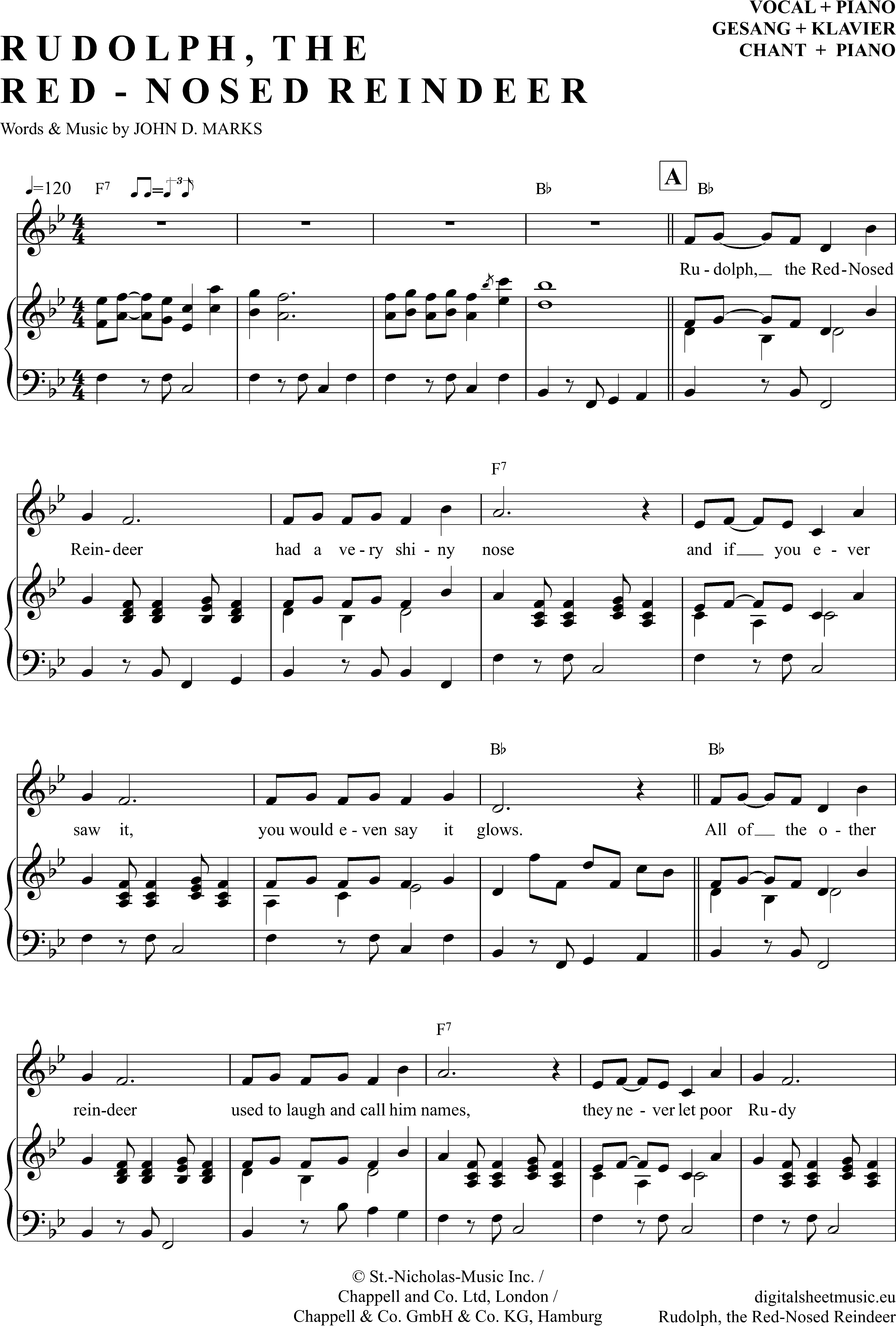
"Rudolph the Red-Nosed Reindeer" is one of the most beloved Christmas songs of all time — and in this piano and vocal arrangement, it sounds immediately festive and full of life. The sheet music is aimed at players with approximately three years of lessons or more. The occasional wide interval leaps in the vocal line demand reliable pitch accuracy, and the brisk tempo leaves little room for hesitation. As part of the playbackNOTEN series, the piece is also prepared for ensemble compatibility.
Sheet Music "Rudolph the Red-Nosed Reindeer" – Spirited Christmas Classic for Piano & Voice
"Rudolph the Red-Nosed Reindeer" was released as a song in 1949 by John D. Marks — the character of Rudolph originally came from a 1939 children's book — and tells the story of a reindeer with a glowing red nose who is initially mocked by his peers, until he becomes the hero of Christmas Eve. Frank Sinatra recorded the piece and gave it his unmistakable swinging charm: relaxed, warm-hearted, with that characteristic swing-eighth feel and the buoyant timing that made Sinatra so distinctive.
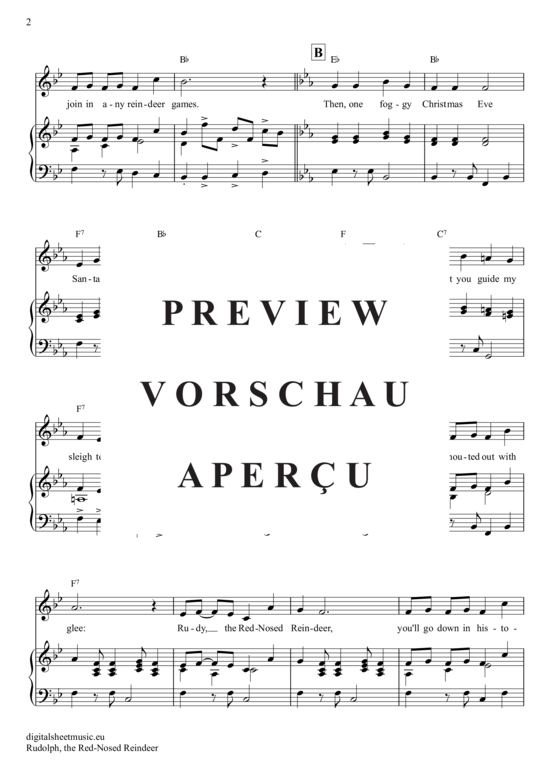
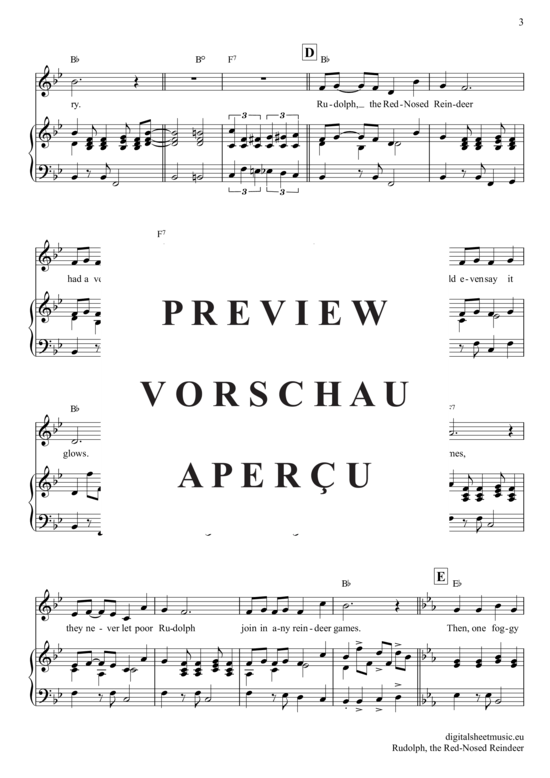
B-flat major gives this arrangement a bright, inviting tonal color — the accompaniment flows naturally, and the vocal line carries the melody comfortably through the middle register, with a range of exactly one octave (C4–C5, or 12 semitones). The challenge arises where the vocal line makes occasional wide leaps: these large interval jumps demand precise vocal control — they remain within the notated one-octave range, but bridge a noticeable distance between pitches that requires secure intonation. The piano stays clearly in its accompanying role: the chord structure follows the primary functions of tonic, subdominant, and dominant in B-flat major, maintained in a steady accompaniment pulse that supports the voice without crowding it. In a swing context, a non-legato touch is recommended for the piano part — slightly detached, with a springy weight — so the pulse stays alive without covering the vocal line. The harmony is entirely diatonic — with no chromatic deviations — which aids orientation, though the tempo remains consistently demanding throughout. There is also a brief modulation to E-flat major, which gives the piece a small but effective harmonic lift.
A note specifically for classically trained singers: swing timing works differently from how it is notated. The eighth notes do not sound even — they carry a slight swing feel, where the first eighth note of each pair is emphasized and held a touch longer, while the second arrives shorter and lighter. Singers accustomed to performing eighth notes in strict even time will need to consciously practice this pulse. The most effective approach is to first speak or hum the piece with the rhythmic feel alone, before adding the pitches.
- Vocal Range: c' to c'' (1 octave)
- Main Challenge: Large interval leaps spanning more than an octave in the vocal line
 |
Practicing the leap passages in the vocal line in isolation first — without piano accompaniment, with only the root pitch in your ear — will make them noticeably more secure once you return to the full arrangement. Particularly helpful: hear the target pitch internally before singing it. The modulation to E-flat major is brief but clear — knowing it is coming means you won't lose your footing there. At the piano, keeping the swing-eighth pulse steady and relaxed allows the vocal line to phrase freely above it.
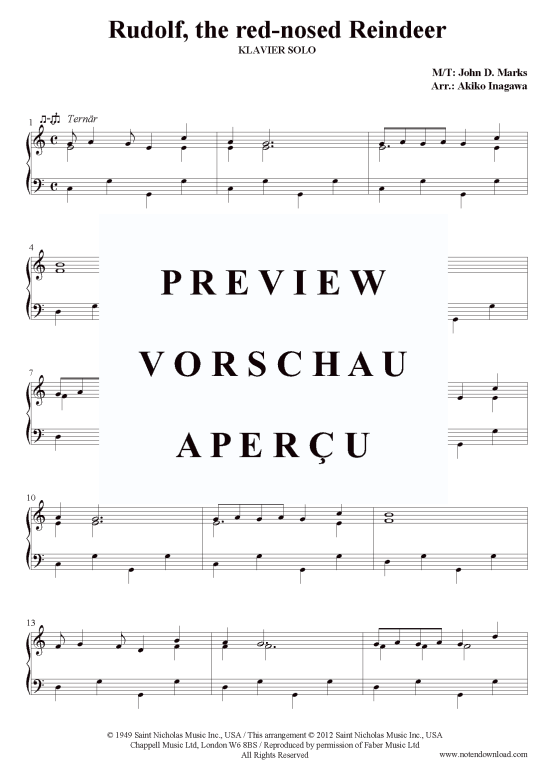
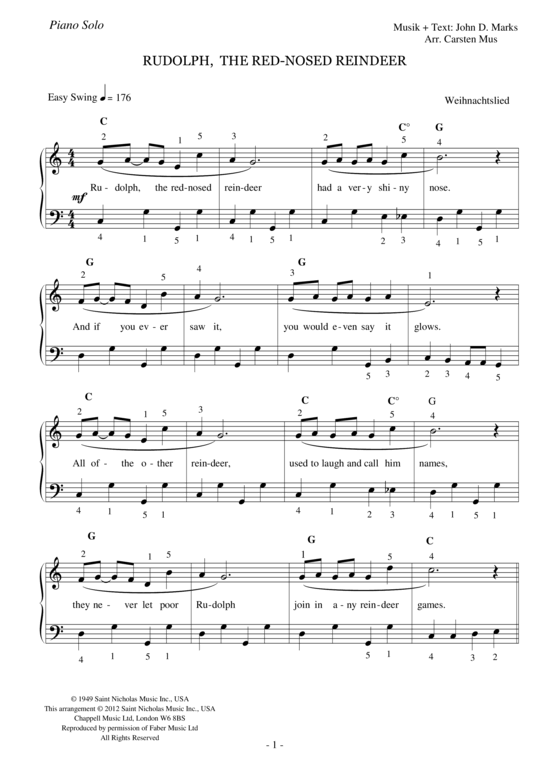
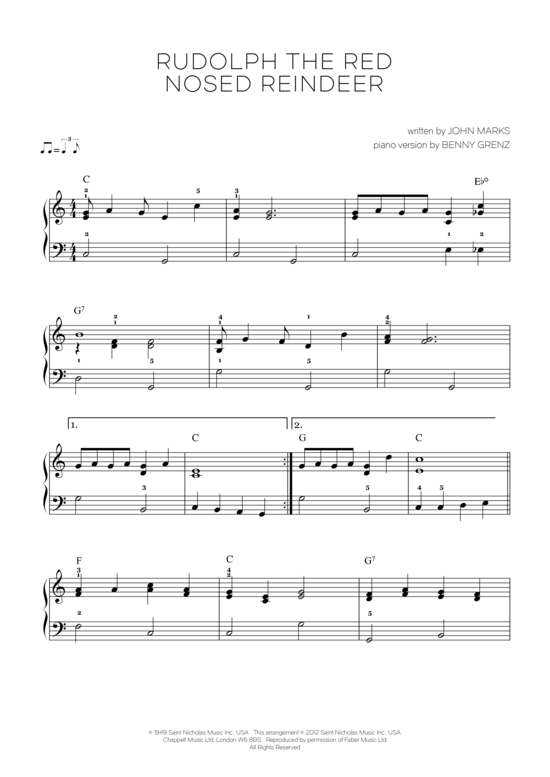
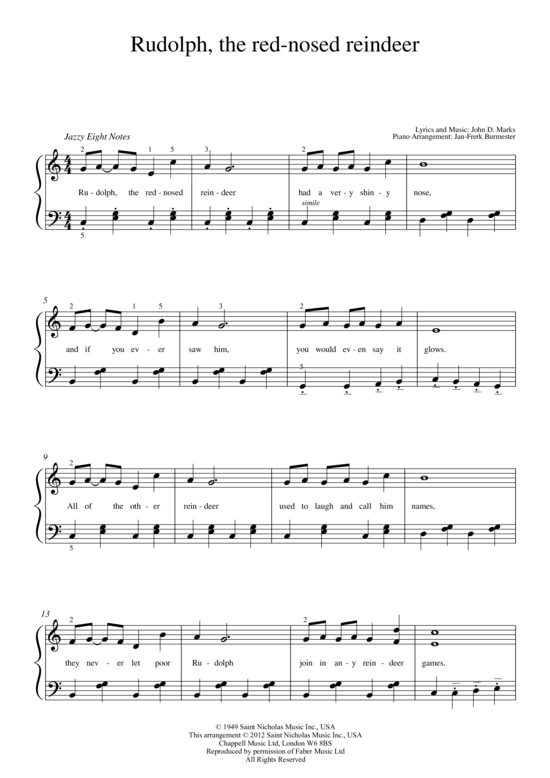
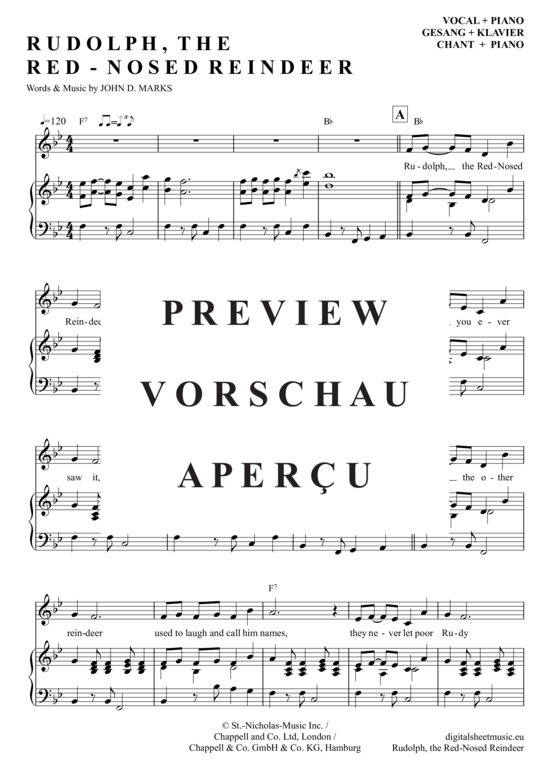
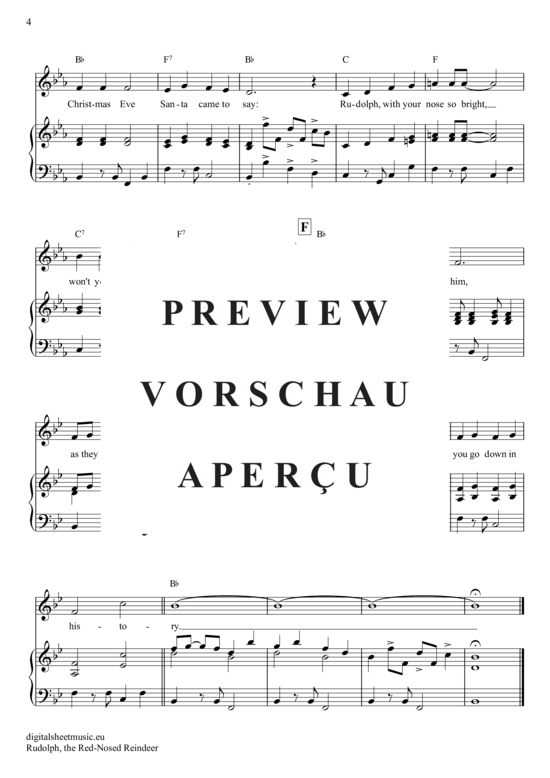
A pageable score preview of all four pages is available in advance — no blind purchase. A short demo audio sample is available free of charge so you can hear the arrangement before buying. The sheet music is available for immediate download after purchase. 100% licensed — ready to perform legally right away. A playback track with melody and without melody is also available as a purchasable option, ideal for internalizing tempo and phrasing.
Editorially reviewed by the notendownload.com team

Product Reviews