

 Orders
 Addresses
 Payment methods



Details
| Product number: | GC005 pdf |
|---|---|
| Arrangement: | Ensemble |
| Genre: | March |
| Band: | Brass Band |
| Ensemble: | Band |
| Authors: | Huffine , G. H. |
| Pages: | 30 |
| arrangers: | Cline. Gilbert |
| duration: | 02:35 |
| Publisher: | Solid Brass Music |
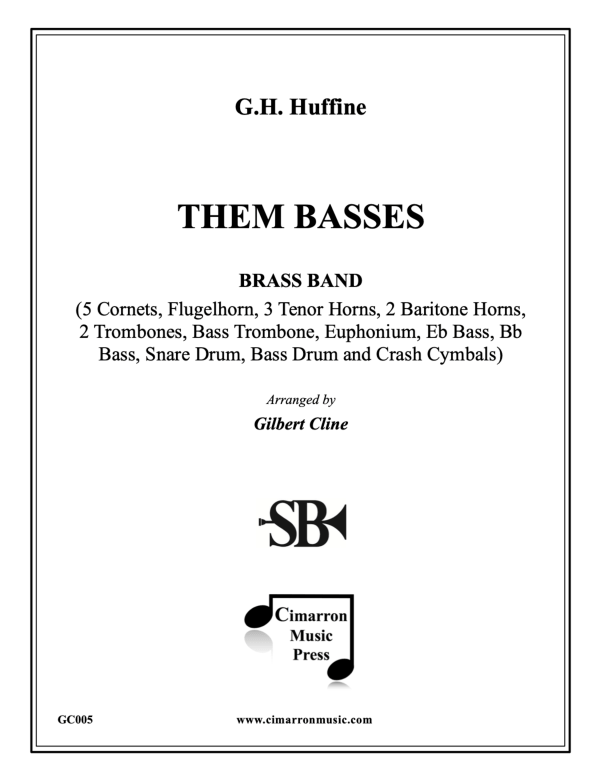
Them Basses - Sheet Music for Brass Band G. H. Huffine







 100% Legal & Licensed
 Verified by Musicians
 No Subscription. One-Time Purchase.
 Instant Download after Purchase
Details
| Product number: | GC005 pdf |
|---|---|
| Arrangement: | Ensemble |
| Genre: | March |
| Band: | Brass Band |
| Ensemble: | Band |
| Authors: | Huffine , G. H. |
| Pages: | 30 |
| arrangers: | Cline. Gilbert |
| duration: | 02:35 |
| Publisher: | Solid Brass Music |
Product Description
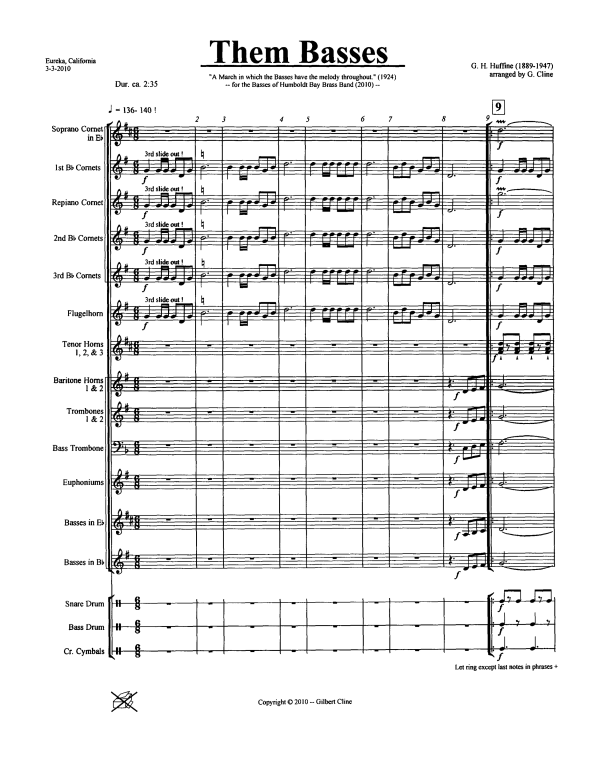
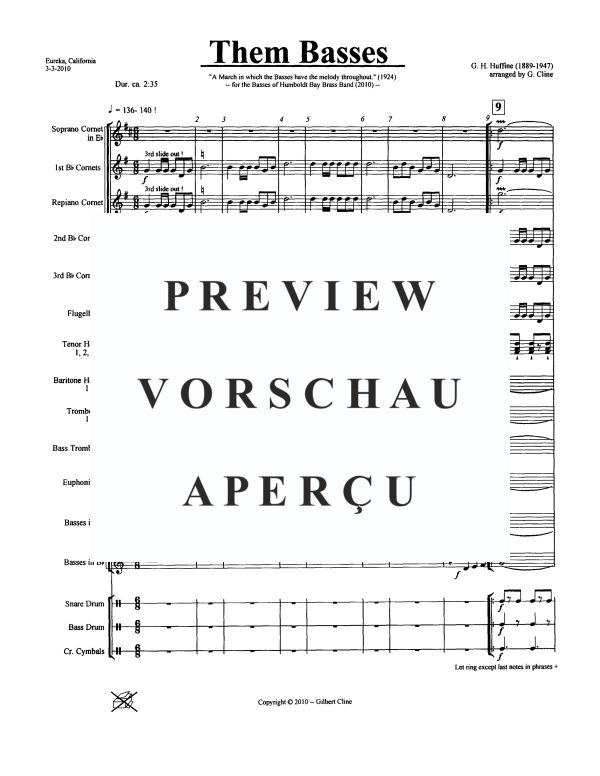
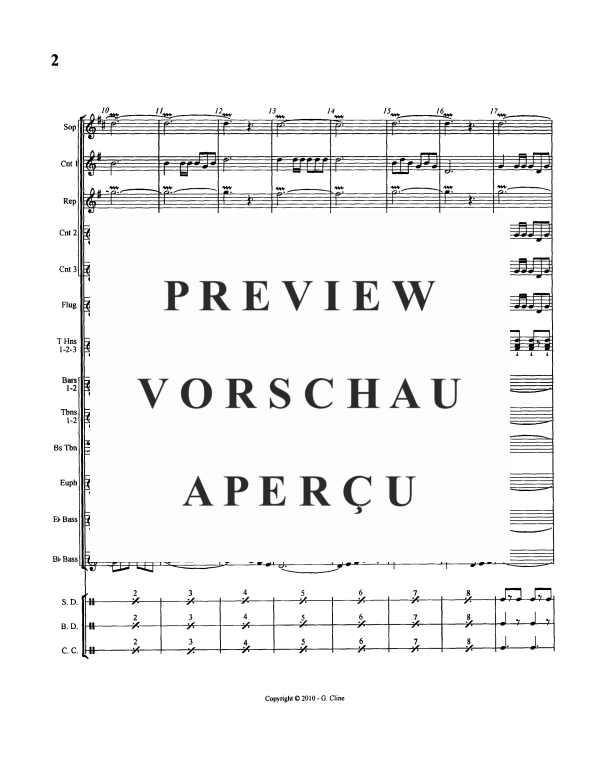
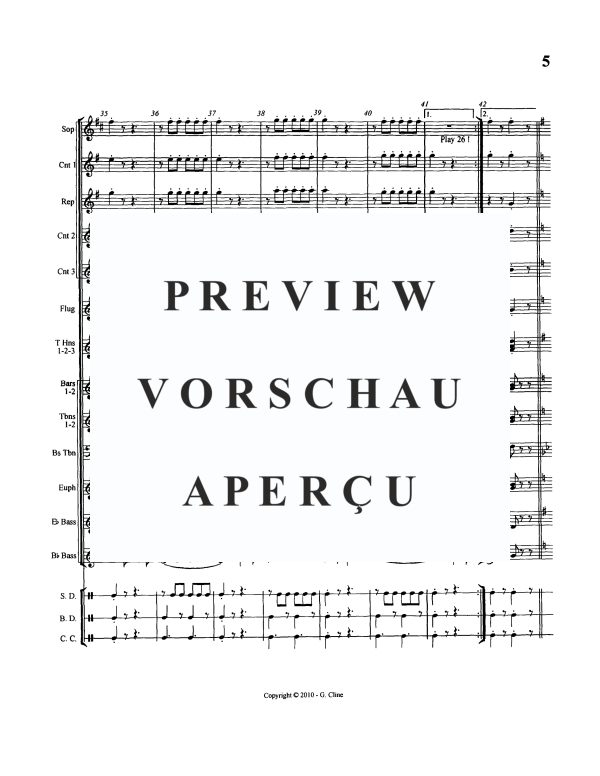
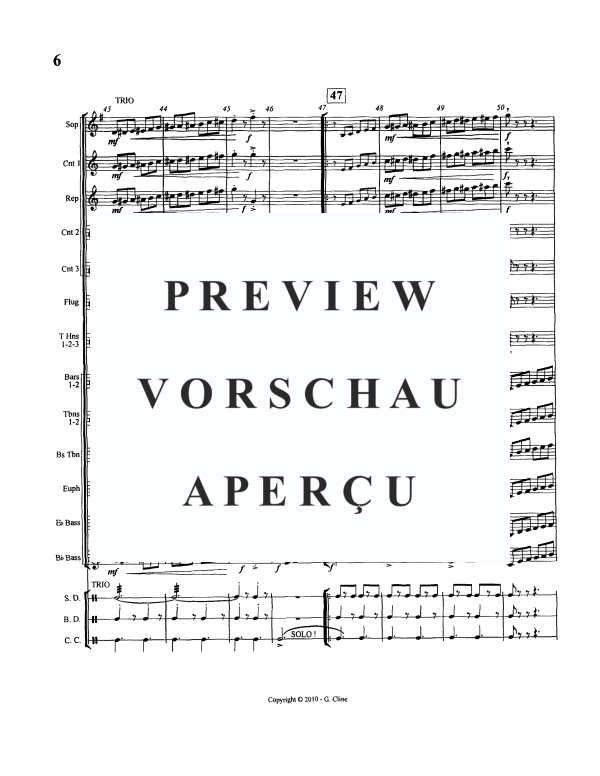
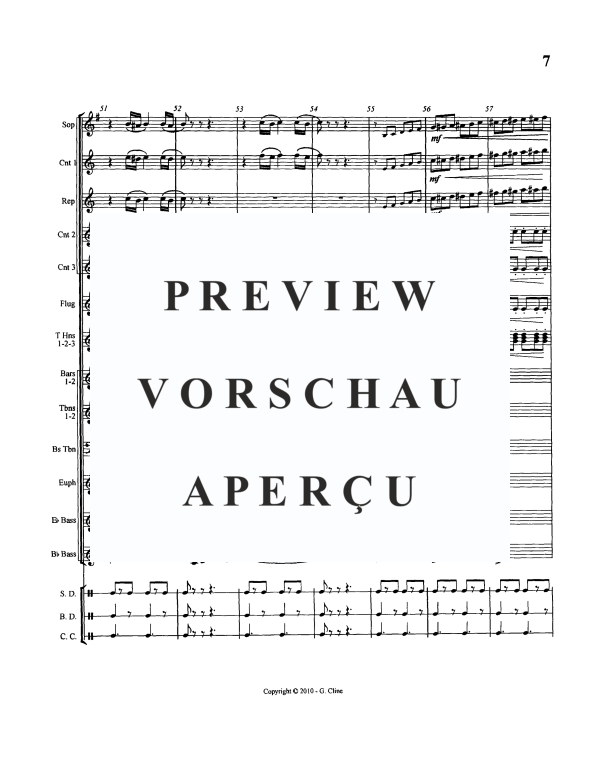
The work "Them Basses" is aptly described in the 1924 Fillmore publication as "A march in which the basses have the melody throughout." It is one of the few musical works that pursue such a compositional approach. With the exception of the eight-bar bugle introduction, the bass instruments carry the entire work. In the instrumentation, the basses include not only Bb and Eb tubas (as in Huffines's wind version), but also trombone, Bb baritone, and euphonium.
The cornets here take on the roles of the trumpets and woodwinds of the original version; the Eb soprano cornet and the ripieno cornet receive the trills of the high woodwinds. The tenor horns follow the original scoring concept with repeated chord tones as an important bridge between the bass instruments (with melody in the lower register) and the triple activity of the cornet section. The percussion is largely oriented toward the original, with one exception: while earlier arrangements often employed only two players (bass percussion with double coverage and cymbals on the bass drum), here the cymbal player receives exposed solos to fill certain gaps.
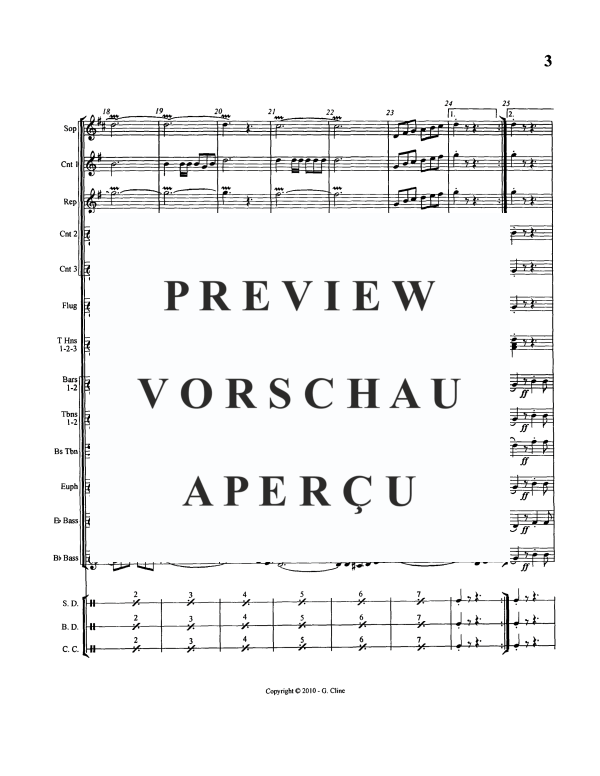
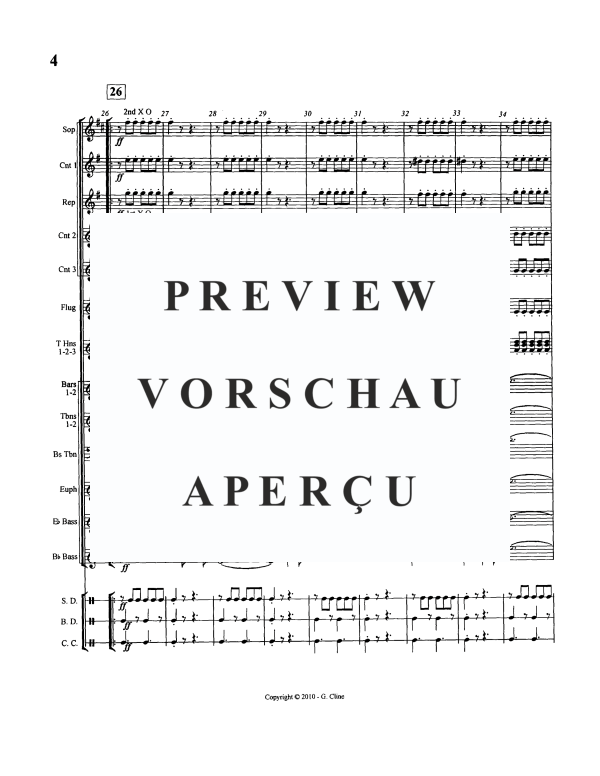
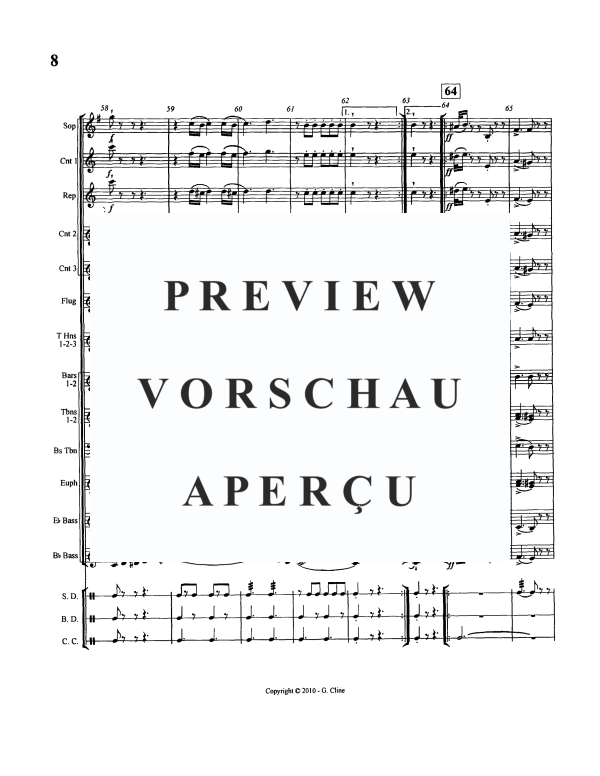
The tempo of the march should be lively, in the tradition of a "quick step" march. Various recordings document tempos of 136–144 BPM; this is necessary to manage the rapid eighth-note figures. The dynamics were adapted from the original: while the original version provided only two dynamic indications, nuances have been added from beginning to end. Humboldt Bay Brass Band noted that subtle, natural crescendos on ascending triplet lines are very effective. Noteworthy are the fully diminished seventh chords in measures 65 and 69; the accents are here correctly weighted on these chord tones, always creating an elegant tonal stability in the unison passages. In general, the best definition of "accent" is to be understood as "a volume louder than the surrounding notes"—while avoiding the temptation to articulate stable notes with excessive tonguing/breath output.