

 Orders
 Addresses
 Payment methods



Details
| Product number: | mfgt080sp pdf |
|---|---|
| Arrangement: | Ensemble |
| Genre: | Concert work |
| Ensemble: | Mixed ensemble |
| Authors: | Tailleferre, Germaine (1892-1983) |
| Pages: | 424 |
| duration: | 40:00 |
| Publisher: | Musik Fabrik Music Publishing |
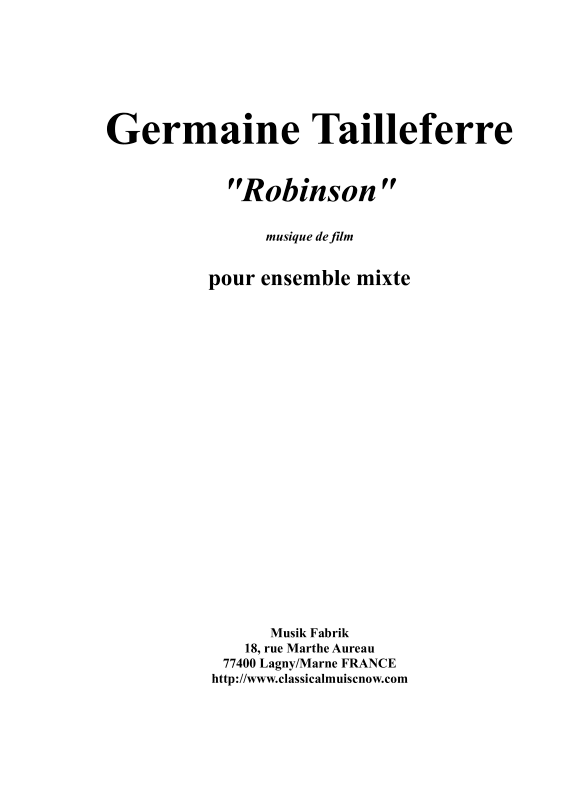
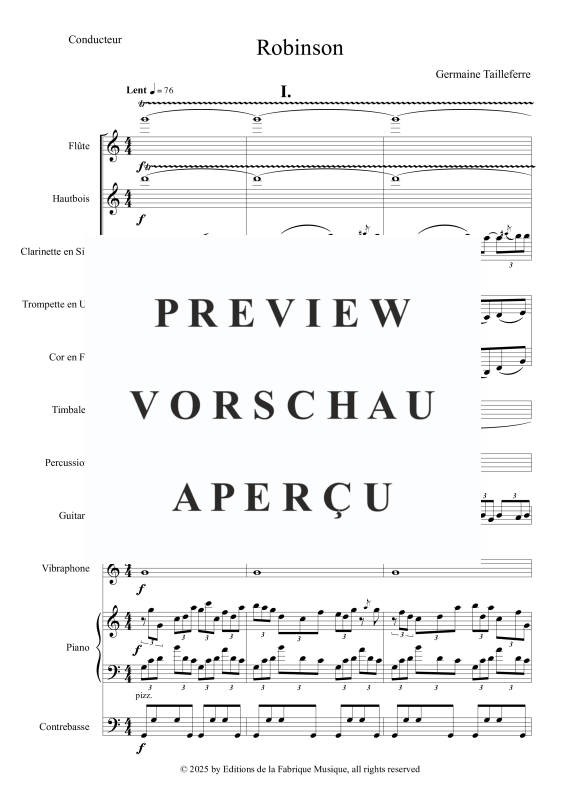
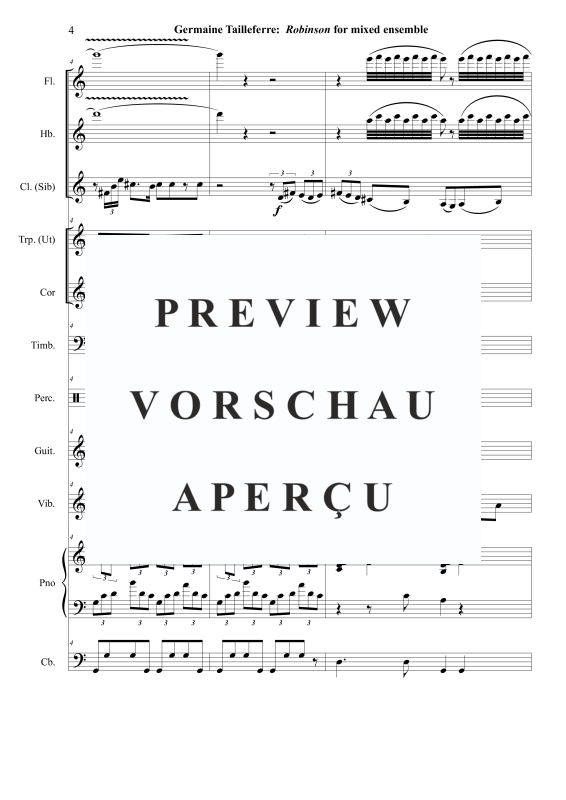
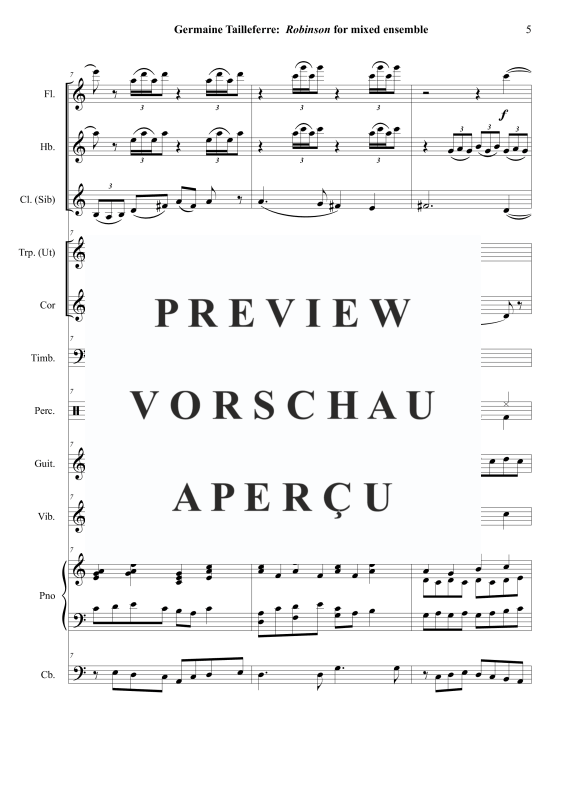
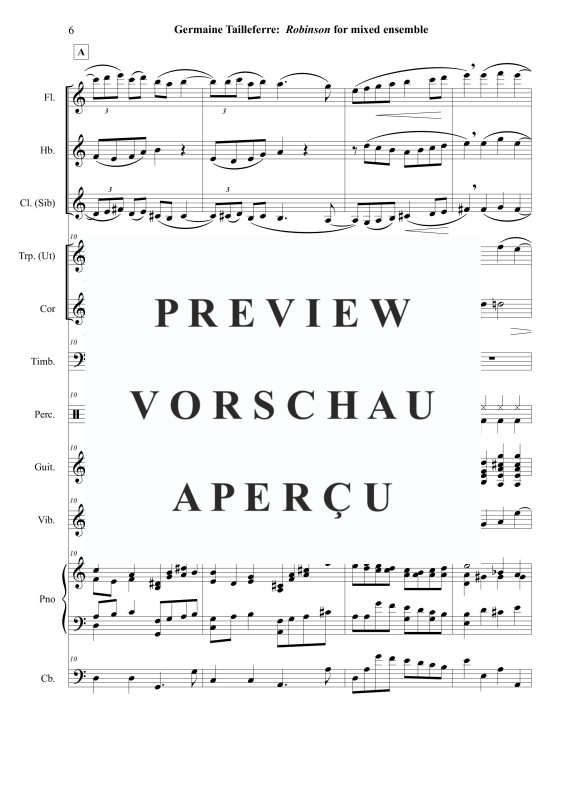
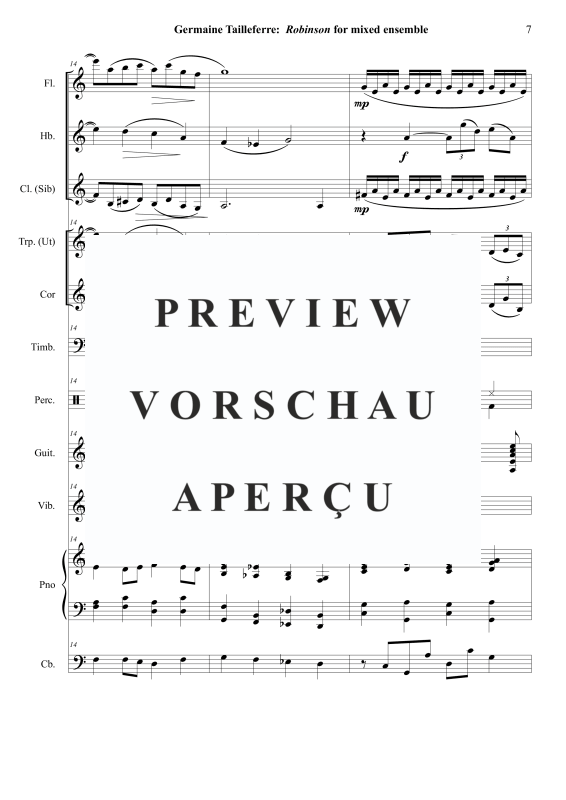
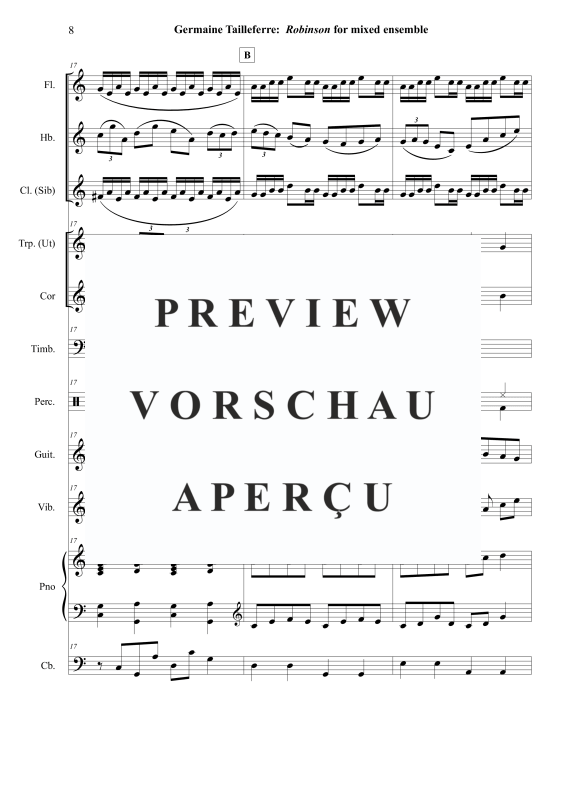
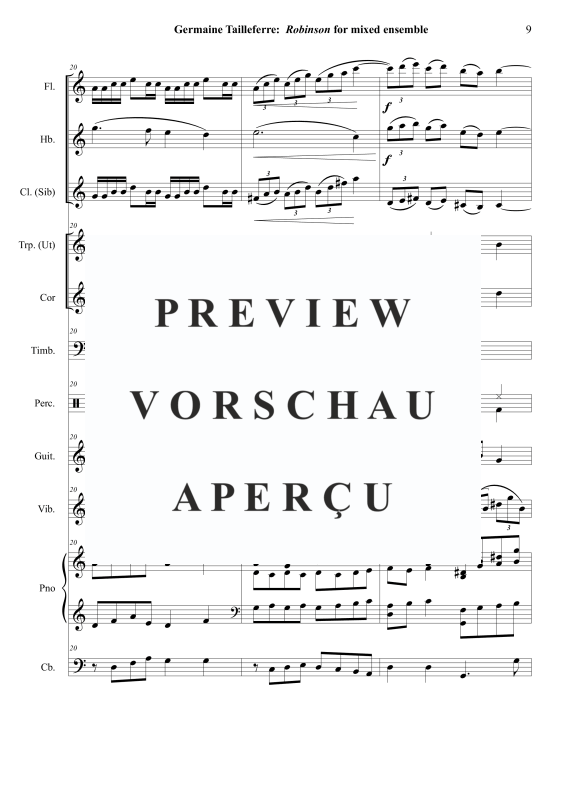
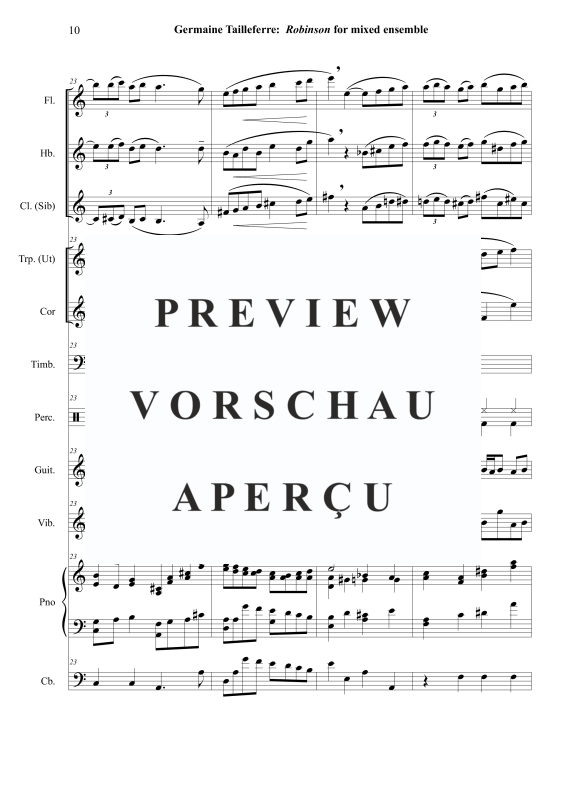
Robinson - Sheet Music for Mixed Ensemble Germaine Tailleferre







 100% Legal & Licensed
 Verified by Musicians
 No Subscription. One-Time Purchase.
 Instant Download after Purchase
Details
| Product number: | mfgt080sp pdf |
|---|---|
| Arrangement: | Ensemble |
| Genre: | Concert work |
| Ensemble: | Mixed ensemble |
| Authors: | Tailleferre, Germaine (1892-1983) |
| Pages: | 424 |
| duration: | 40:00 |
| Publisher: | Musik Fabrik Music Publishing |
Product Description
Robinson is a 30-minute film released in 1957, directed by Marco de Gastyne, produced by Franfilmdis (Producer: Henri Beauvais). Set in the Landes, it follows a boy named Marc who, after having just read Robinson Crusoe, sets off with his dog, a young monkey given to him by a sailor, and a friend on a makeshift boat to experience his own adventure on an island. The cinematography was by Henri Decaë and Jean Rabier – both later central figures of the Nouvelle Vague, Decaë as cameraman for Melville and Malle, Rabier as a regular collaborator of Chabrol – with editing by Victor Grizelin.
Robinson is part of a long-standing collaboration between Tailleferre and de Gastyne, spanning the 1950s, including Cher vieux Paris! (1950), Caroline au pays natal (1951), La Parisienne (1952), Gavarni et son temps (1952), Entre deux guerres (1952), L'homme, notre ami (1956) and, in the same year as Robinson, Les plus beaux jours (1957).
Tailleferre's score comprises approximately 40 minutes over 18 main sequences – considerably longer than the 30-minute film itself, suggesting a dense, tightly woven compositional approach with music under much, if not all, of the film.
Given the film's premise – a boy's imagined journey inspired by Robinson Crusoe – Tailleferre draws on sailor folklore: the score uses the French folk song "Les Filles de La Rochelle" (a traditional song associated with the port city, long linked with sailors and departure) and features a hornpipe, a dance form idiomatically connected to sailors and seafaring life. The hornpipe reappears in Tailleferre's own work Il était un petit navire, her 1951 premiere of a satirical operetta at the Opéra-Comique – itself a comic play on a French children's song about a sea voyage, and remarkable as a direct reference between the two sailor-themed works.
Instrumentation:
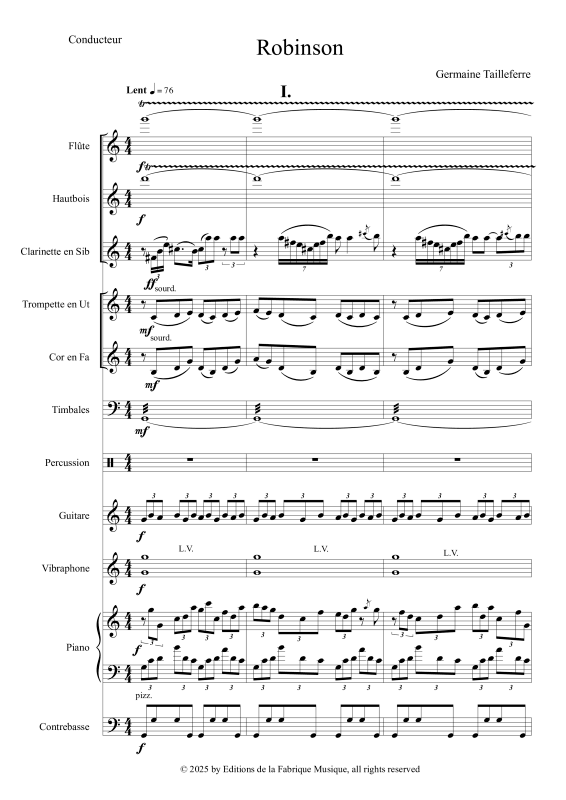
Flute, Oboe, Clarinet, Horn, Trumpet, Timpani, Percussion, Harp, Piano, Vibraphone, Guitar, Double Bass.
The presence of the guitar is notable: Robinson is among Tailleferre's longest works containing the instrument, and lends the score its own coloration – likely employed for its folk and "island solitude" associations alongside the harp and vibraphone, which complete a chamber orchestral palette well suited to a light, adventurous children's film register.