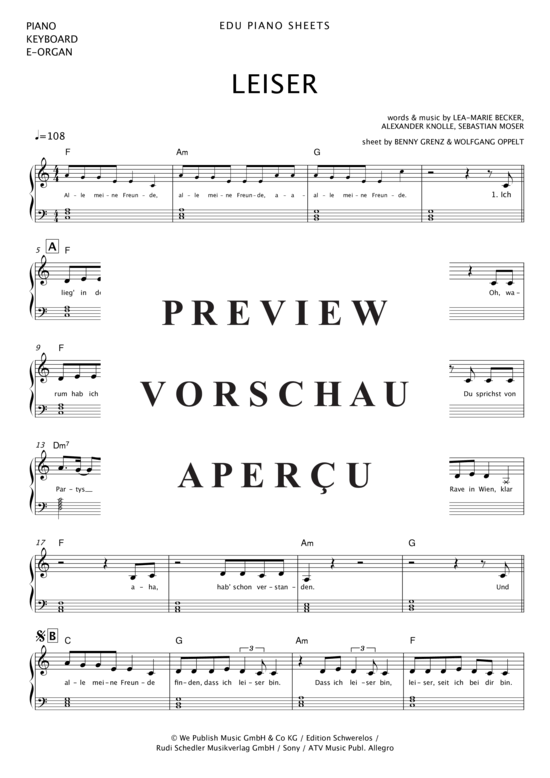
The concept of EDU PIANO SHEETS was developed to learn and practice free playing, as is common in popular music. It is based on distributing the melody in the right hand and the accompanying harmonies in the left hand.
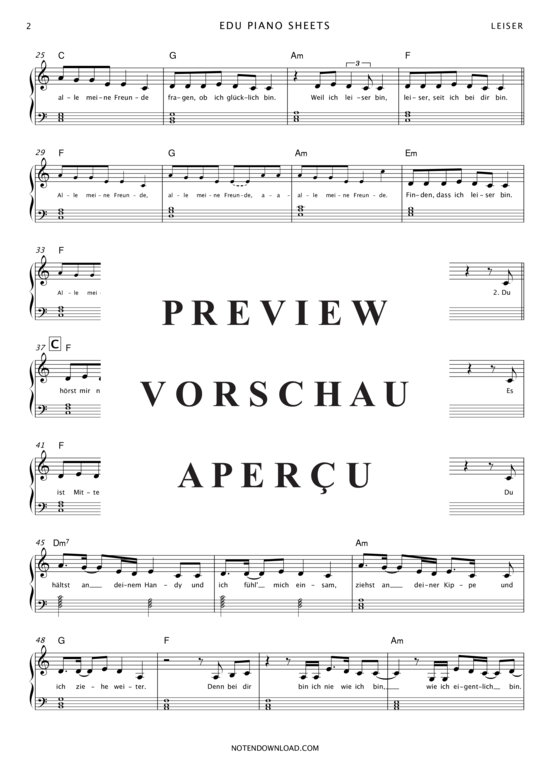
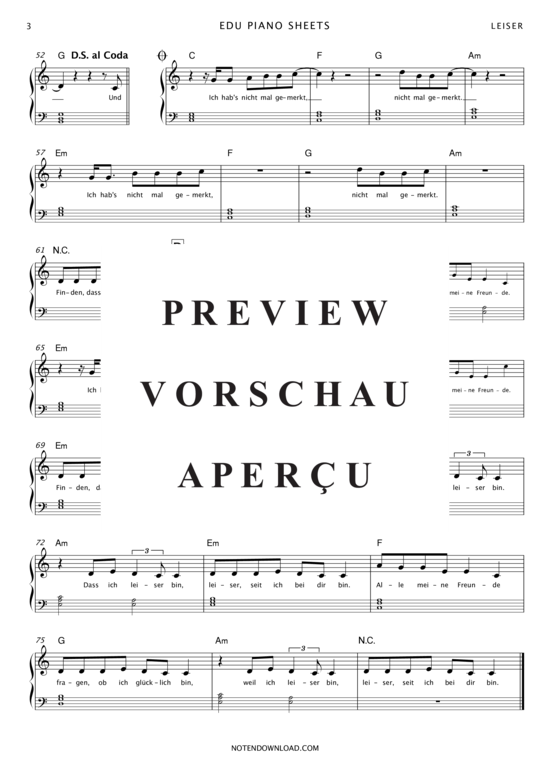
As is usual in lead sheets, you will find the notated (vocal) melody and the accompanying harmonies in the form of chord symbols. As a supplement, simple chord voicings in an easy-to-play variant are notated for the left hand. Furthermore, rhythmic patterns are suggested to vary the chords in the left hand. In the last step, there are three fully notated examples of the first bars for extended accompaniments.
First, practice the melody of the song in the right hand. For this, listening examples should always be consulted to get to know the song and gain an impression of the composition and instrumentation. Especially when playing along with a vocal melody (which is usually the case), it helps enormously to know the melody well before practicing.
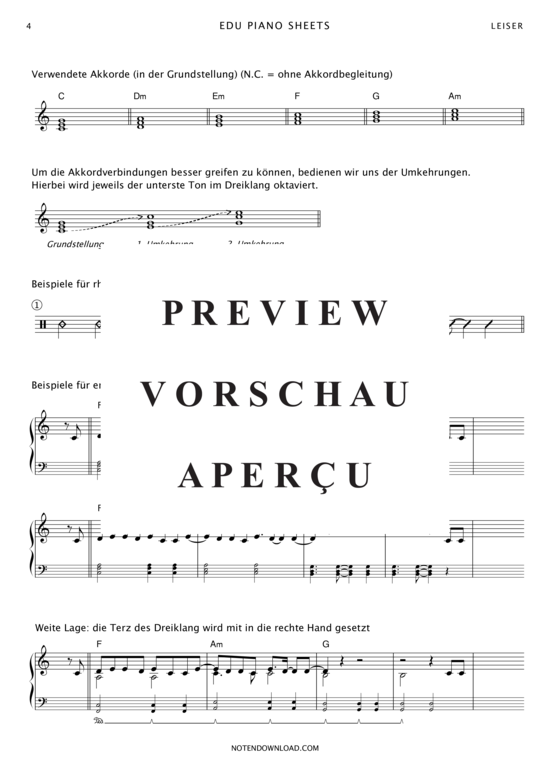
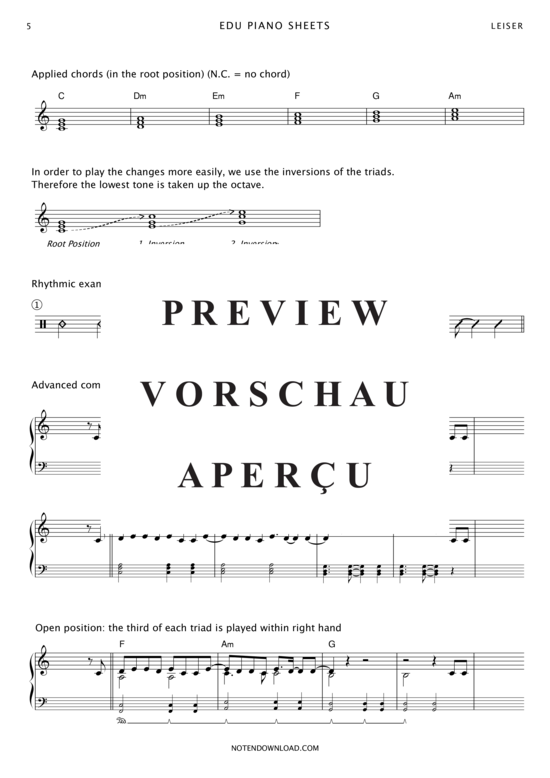
In the next step, we add simple chords in the left hand as accompaniment. To make changing hand positions easier and to be able to play the left hand without looking as soon as possible, we use inversions alongside the root position. The chords are first played as whole notes on beat one (for half-bar chord changes, on beats one and three).
An extension of the left-hand accompaniment can be achieved through rhythmizing the chords. For this, patterns are notated that can be practiced individually and later varied freely.
As a conclusion, there are ideas for accompaniments based on arpeggios, i.e. the notes contained in the chord are played individually and rhythmically appropriately. This makes it possible to use additional intervals and to choose a lower register, e.g. for the root notes, to achieve a fuller sound. In open voicing, individual chord tones can additionally be played with the right hand.


 Orders
 Addresses
 Payment methods











 100% Legal & Licensed
 Verified by Musicians
 No Subscription. One-Time Purchase.
 Instant Download after Purchase
