

 Orders
 Addresses
 Payment methods





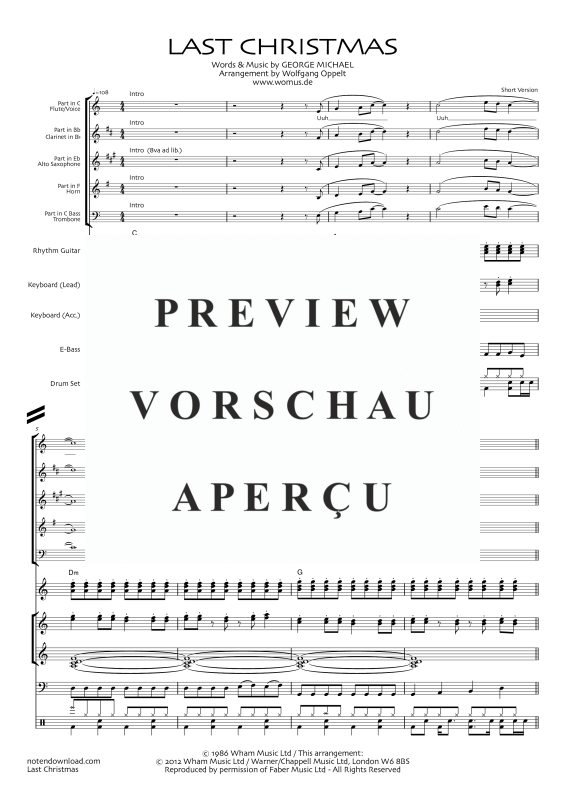
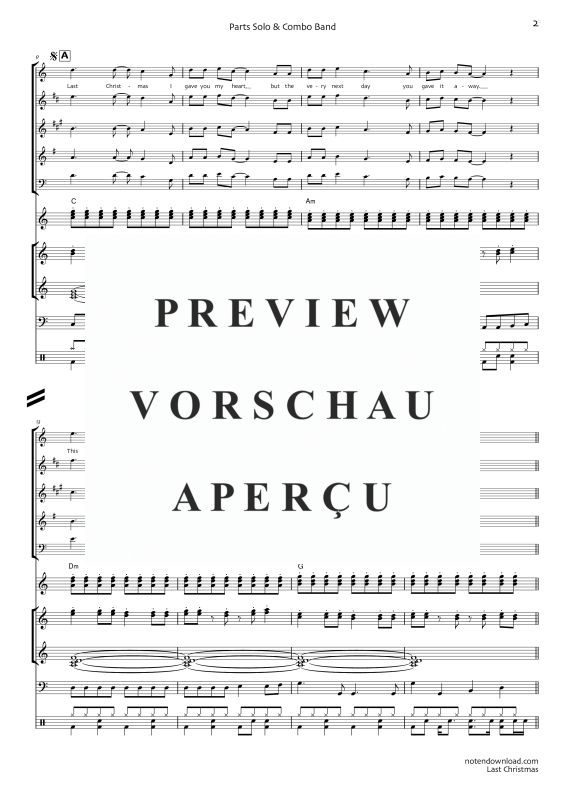
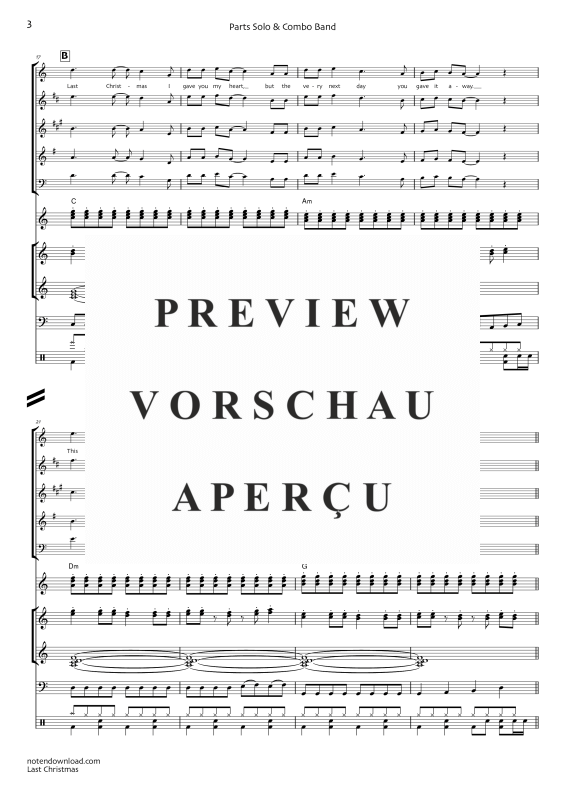
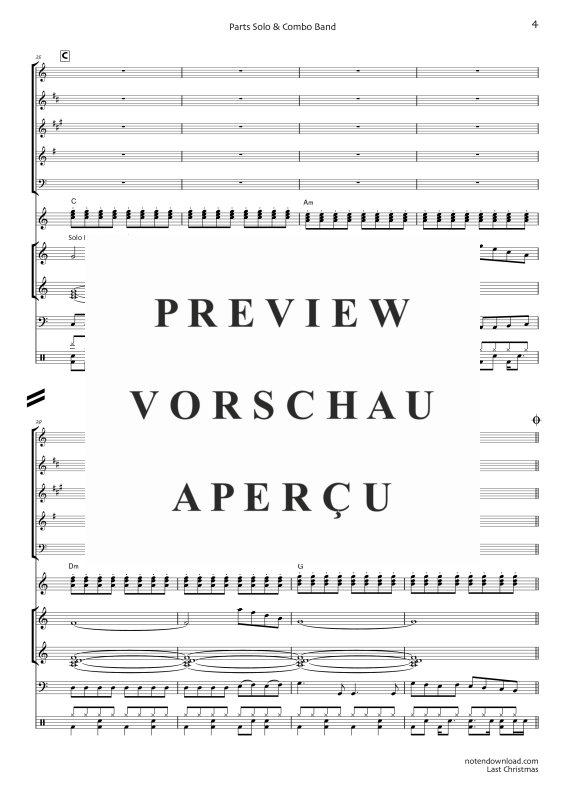
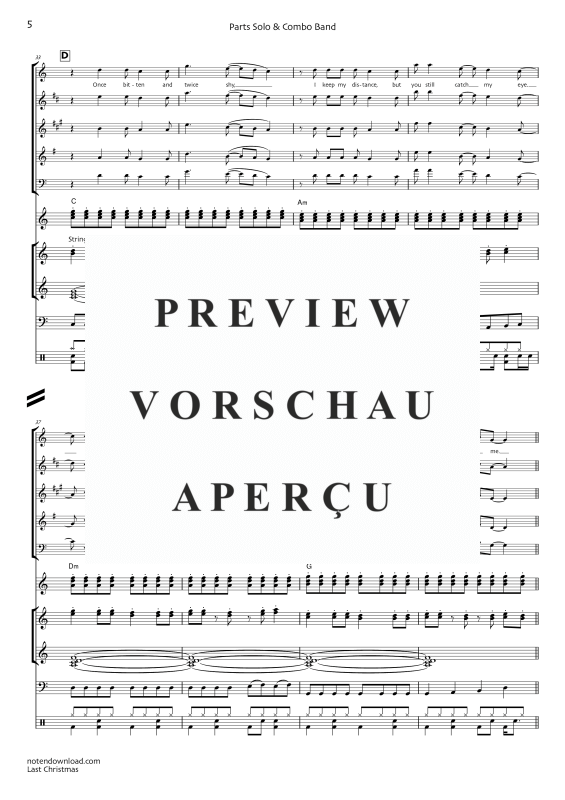
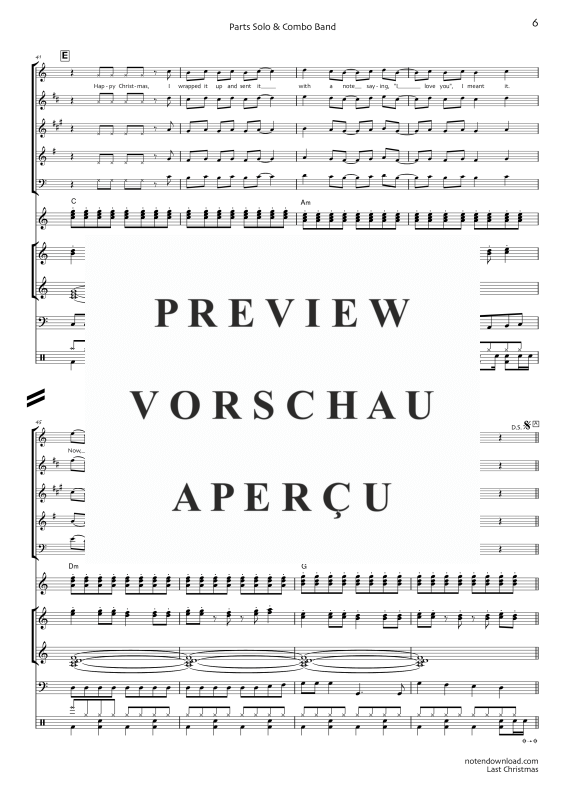
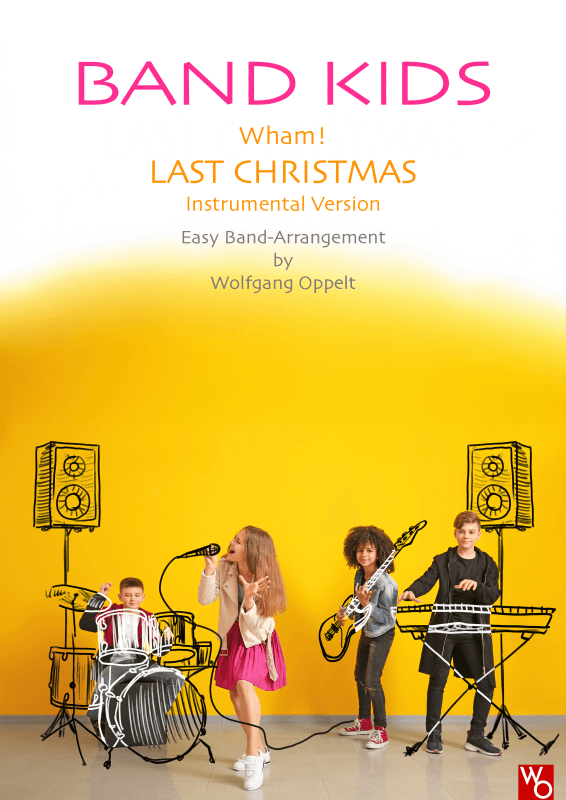
Last Christmas - Sheet Music for Combo band and solo instruments in C, Bb, E flat, F and C bass clef Wham!







 100% Legal & Licensed
 Verified by Musicians
 No Subscription. One-Time Purchase.
 Instant Download after Purchase
Product Description
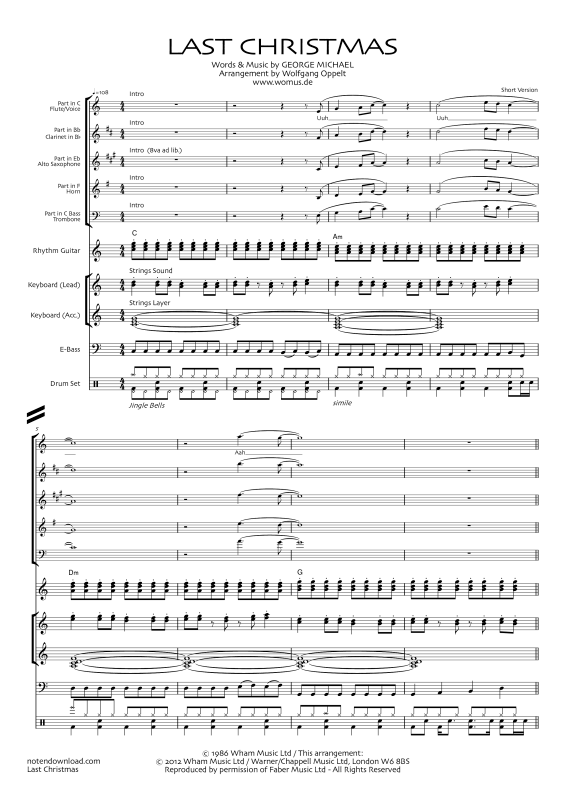
Two arrangements of Last Christmas by the band Wham! are available on the ND website: A vocal version for solo vocals and accompanying band and an instrumental version for solo instruments in C (flute, oboe, violin etc.), Bb (clarinet, trumpet, soprano/tenor sax. etc.), Eb (alto sax., cornet etc.), F (horn, English horn etc.) and C bass (trombone, bassoon, tuba etc.) and accompanying band.
Both versions are ideal for private music schools that specialize in coaching pop bands. They are a kind of musical construction kit with modules that can be flexibly combined. This means that you can put together completely different line-ups, depending on which musicians are available (from 2-6 or more musicians). The instrumental version can also feature several soloists, e.g. in octave intervals.
This arrangement for kids aged 6-16 is a greatly simplified and shortened version of the original, but in its simplicity it is composed of original grooves. The result is a compact sound that sounds wonderfully similar to the original mix. The only thing missing are the orchestral effects that make it seem so "big". As the various grooves are repeated over and over again, the arrangement is relatively easy to play and therefore certainly a lot of fun.
Hints and tips
The vocals are a little more difficult and the singer needs some experience and above all a high voice. There are some very high passages that George Michael sings in "head voice" (falsetto). The vocal part can also be sung in the lower register (alto, baritone, bass). It can then simply be sung an octave lower
A little tip: There is a second edition on the website for solo instruments and band, which is set a tone lower (C major). The flute part is underlaid with the lyrics and can be used as a vocal part.
The rhythm guitar only has 4 of the simplest chords to play, which anyone can teach themselves - D, Hm (English Bm), Em and A (instrumental version: C, Am, Dm, G). You can do this without any knowledge of sheet music. It would be ideal if you could discuss this with a guitarist, because it depends on the position of the chords.
The accompanying keyboard also always plays the same groove, consisting of these 4 chords. However, it would be good if you could read the notes, as the division of the chords is important for the sound. To be able to play the lead keyboard, you need some experience with fingering. It would be good if you could get advice from a keyboard player. The keyboards can also be replaced by stage pianos, which have a fuller and more varied sound and literally "mix up" the band sound.
In order to be able to play the bass part, you should already have some experience. It would be a good idea to find a bass player who can show you everything bit by bit. Of course, you can also teach yourself, but it takes time. A little tip: You can use a plectrum to hit the strings, which is a plastic sheet that allows you to play faster.
The drum groove basically always stays the same. It works according to the famous "boom-zap" principle used by drummers. This refers to the quarter beat of the bass drum and snare drum, which always alternate, with the bass drum going all the way through, which simplifies the voice even more. There is then only a series of transitions (fill-ins), which are always repeated.