

 Orders
 Addresses
 Payment methods



Details
| Product number: | GC001 pdf |
|---|---|
| Arrangement: | Ensemble |
| Genre: | Polka |
| Band: | Brass Band |
| Ensemble: | Band |
| Authors: | Cline , Gilbert |
| Pages: | 43 |
| Publisher: | Solid Brass Music |
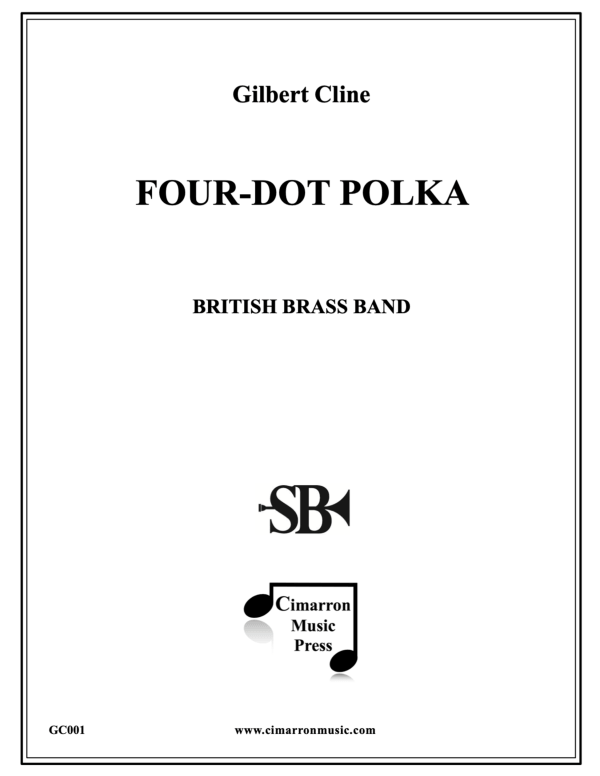
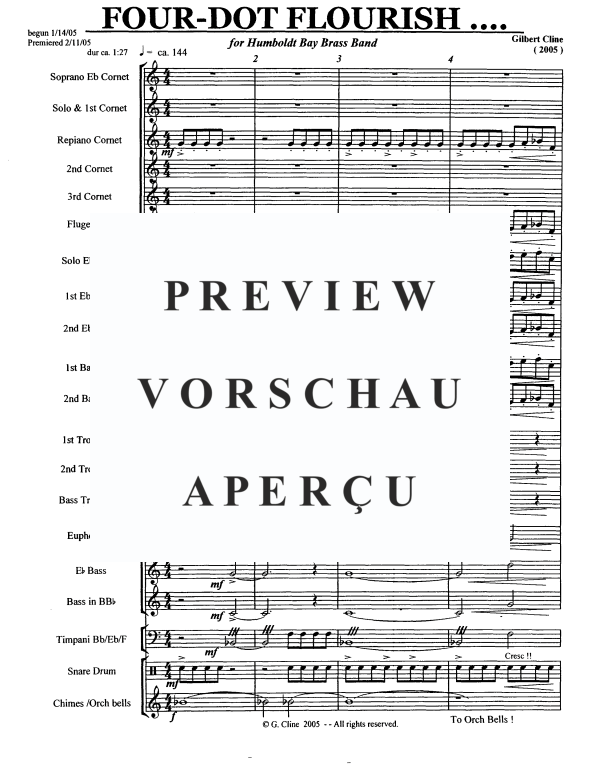
Four-Dot Flourish Polka - Sheet Music for British Brass Band Gilbert Cline







 100% Legal & Licensed
 Verified by Musicians
 No Subscription. One-Time Purchase.
 Instant Download after Purchase
Details
| Product number: | GC001 pdf |
|---|---|
| Arrangement: | Ensemble |
| Genre: | Polka |
| Band: | Brass Band |
| Ensemble: | Band |
| Authors: | Cline , Gilbert |
| Pages: | 43 |
| Publisher: | Solid Brass Music |
Product Description
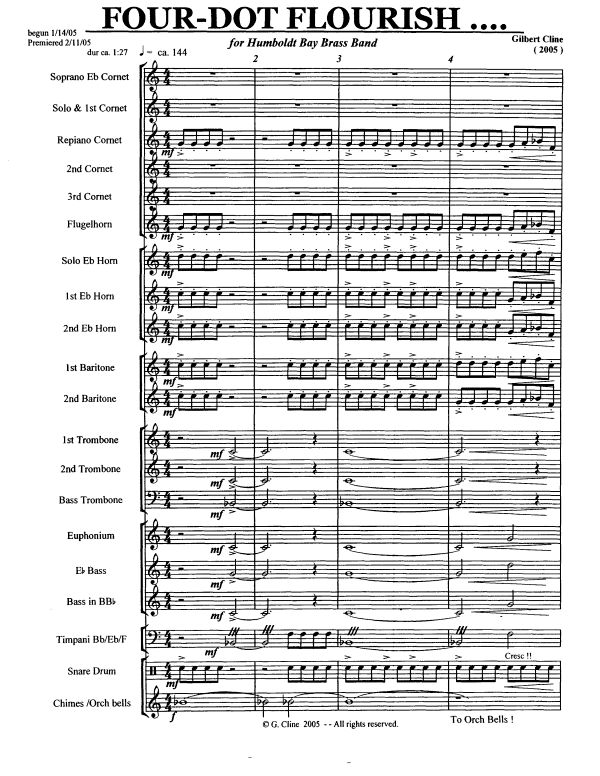
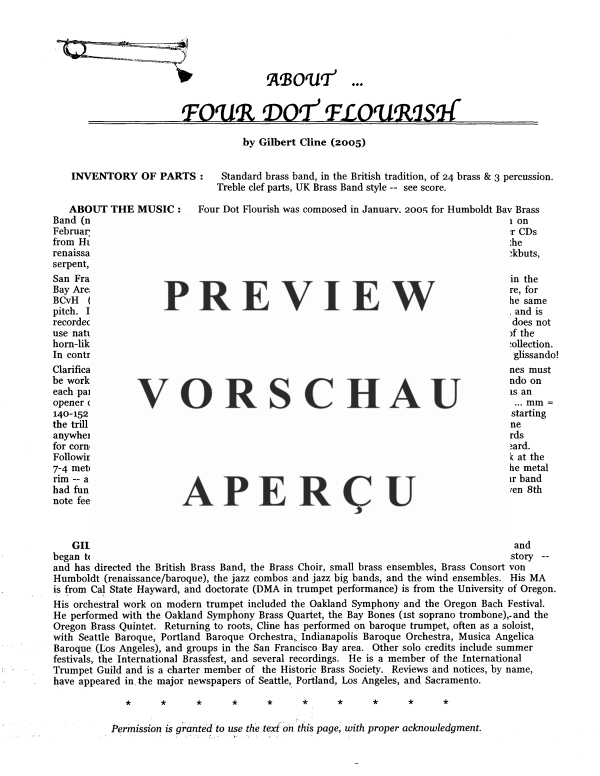
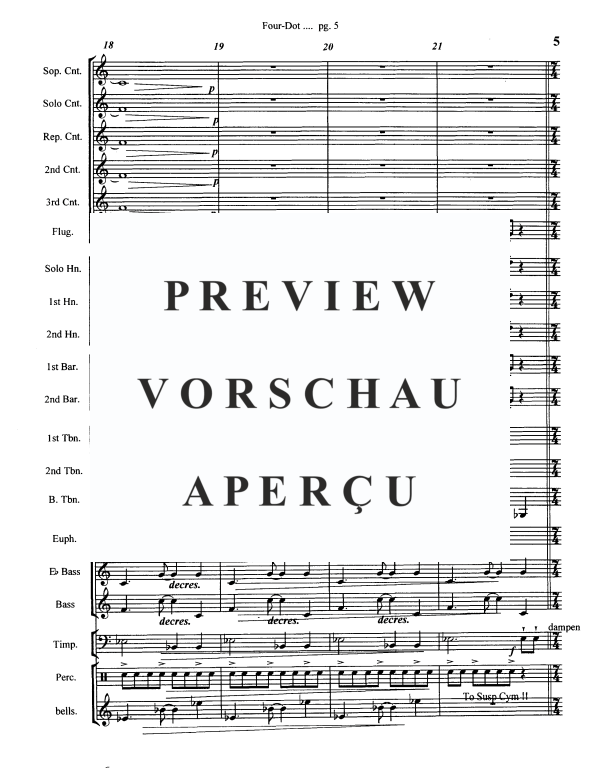
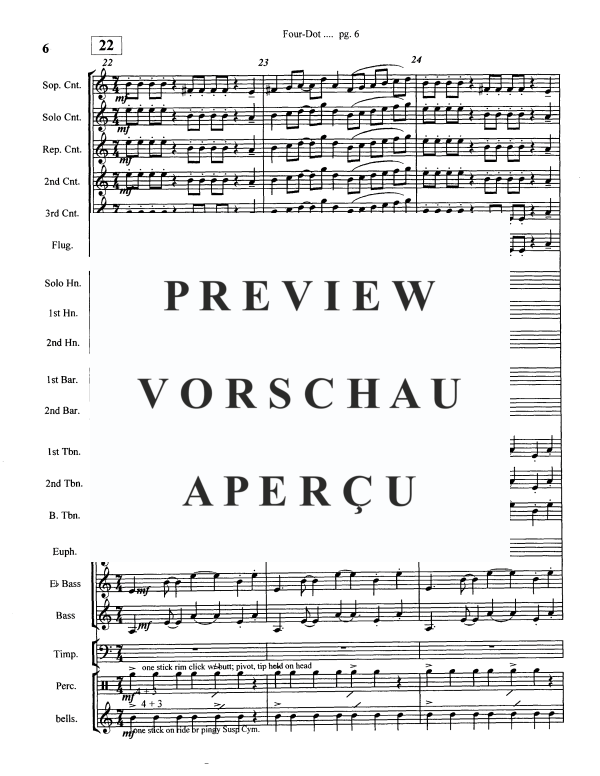
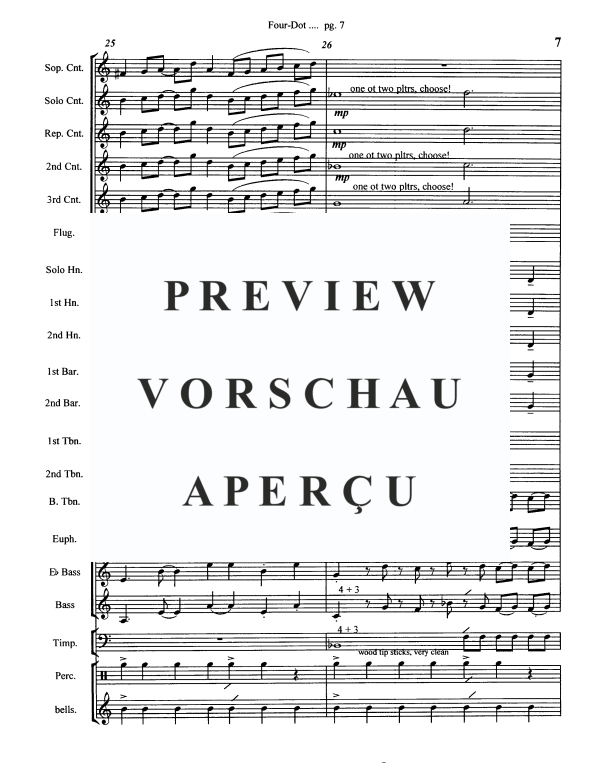
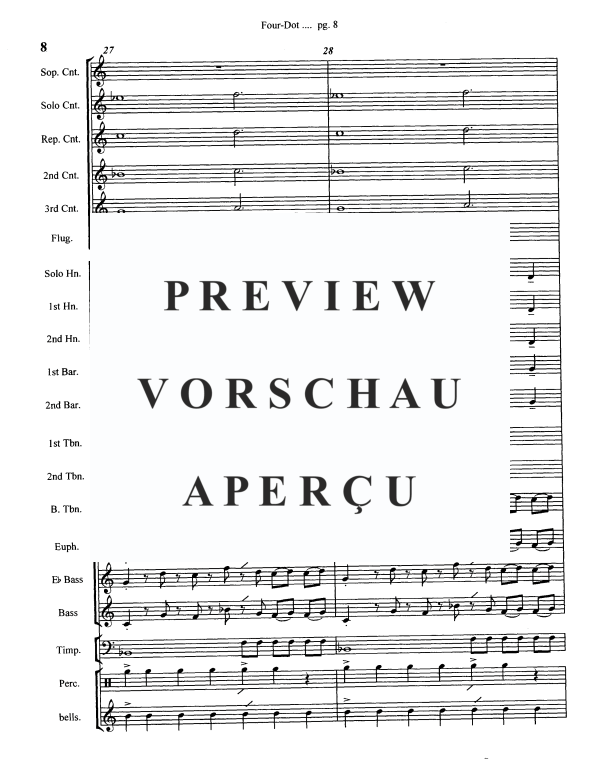
Four Dot Flourish was composed in January 2005 for the Humboldt Bay Brass Band and premiered on February 11, 2005 at McKinleyville High School.
The work was recorded on the CD "Pageantry of Brass," which contains two CDs from Humboldt State University as well as the CDs "Gems of Brass" (1996) and "Tour de Brass" (2003). It uses cornets, Baroque trumpets, sackbut, serpent, lyres, and percussion.
The title refers to the typical three-dot separators as seen in Herb Caen's column in the San Francisco Chronicle. The earlier work Three Dot Fanfare (BCvH) uses a similar motif with three short notes. Four Dot Flourish likewise employs this motif, but without natural trumpets. The use of fourth and fifth harmonies is meant to evoke the sound of early horns and trumpets, in contrast to note sequences between the "official" notes, with trombones allowed for embellishment.
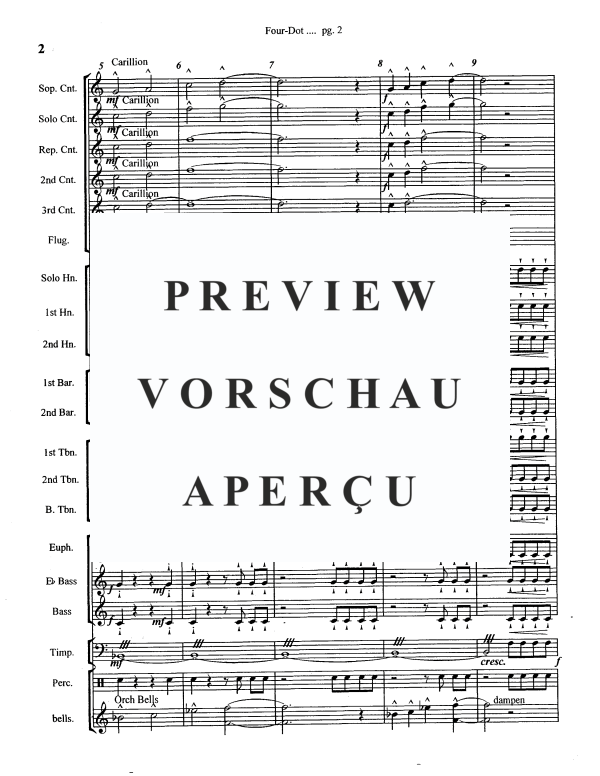
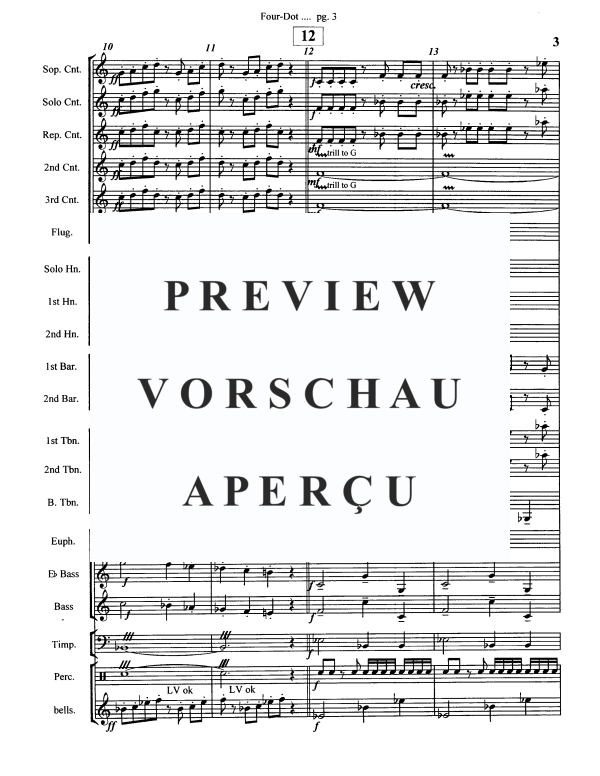
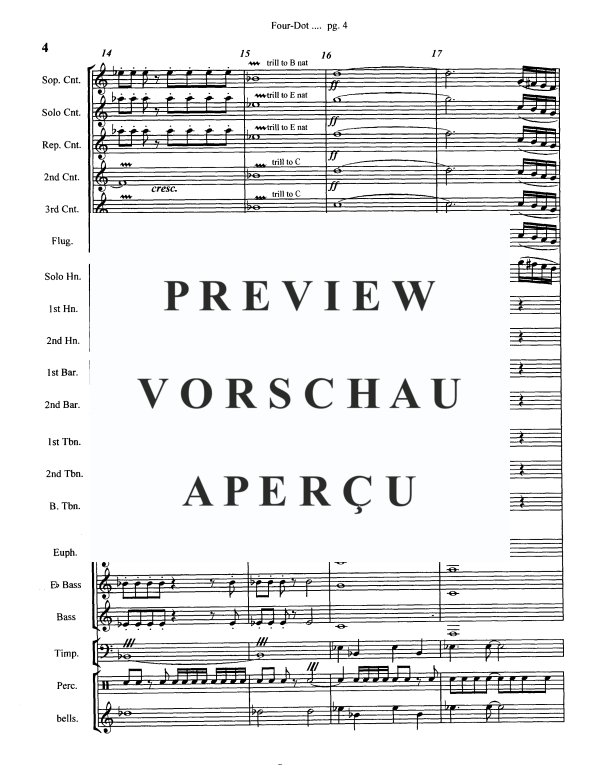
The carillon bell tone effect must be created through careful balancing, requiring four-note chords with strong volume accent followed by steadily decreasing dynamics in each part. Tempo: the work is conceived as an open or closed piece with fast tempo – mm = 140–152 is ideal; anything slower than 138 is too slow. Trill execution: use modern trill execution in this work, from the printed note; no Baroque rule for starting on the auxiliary note. Vibrato: none. Balance questions: At cornets from measure 26 onward, this section must be soloistic to make the horn melody audible. Subsequently, cornets should recede discreetly, not in large blocks. Percussion: The snare drum click at the 7/4 measure should be played with the stick at shoulder height, closed hat – a jazzy sound. Basses generally play with this bass line in contemporary swing style. The eighth sixteenth note should swing in a natural organic sense, but not with swinging eighths as in jazz.