 Orders
 Addresses
 Payment methods




Details
| Product number: | 7070379 pdf |
|---|---|
| Arrangement: | Duet |
| Instruments: | Piano |
| Genre: | Easy Listening |
| Duet: | Piano & Melody Instrument |
| Difficulty: | Moderate |
| Experience: | Intermediate (5–7 years) |
| Key: | D Minor |
| Tempo: | 66 |
| Artist: | Last , James |
| Authors: | Last, James |
| Pages: | 4 |
| duration: | 04:57 |
| Publisher: | ND-Verlag |
Einsamer Hirte (Lonely Shepherd) - Sheet Music for Piano Accompaniment and Melody James Last







 100% Legal & Licensed
 Verified by Musicians
 No Subscription. One-Time Purchase.
 Instant Download after Purchase
Details
| Product number: | 7070379 pdf |
|---|---|
| Arrangement: | Duet |
| Instruments: | Piano |
| Genre: | Easy Listening |
| Duet: | Piano & Melody Instrument |
| Difficulty: | Moderate |
| Experience: | Intermediate (5–7 years) |
| Key: | D Minor |
| Tempo: | 66 |
| Artist: | Last , James |
| Authors: | Last, James |
| Pages: | 4 |
| duration: | 04:57 |
| Publisher: | ND-Verlag |
Product Description
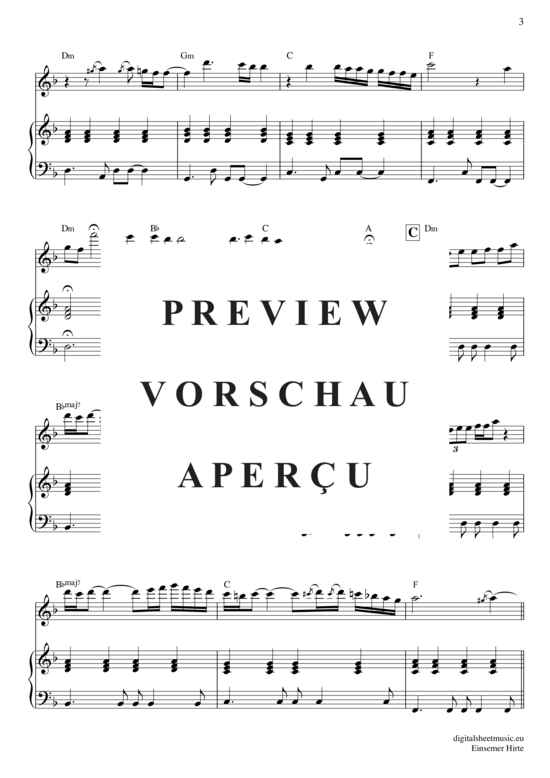
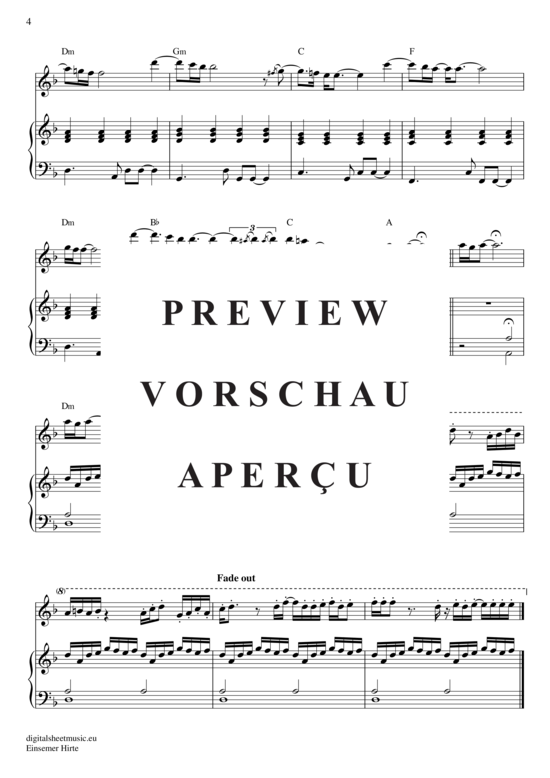
"Der einsame Hirte" is one of James Last's most celebrated instrumental pieces — and as a piano accompaniment with melody, it demands genuine pianistic maturity. These sheet music arrangements are aimed at players with approximately five or more years of instruction. The contrasting rhythmic patterns between both hands require precise coordination that simply cannot be developed in passing. As part of the playbackNOTEN series, the arrangement is also fully compatible for ensemble use.
Sheet Music "Einsamer Hirte (Lonely Shepherd)" – melancholic instrumental melody for piano & melody
James Last was a German orchestra leader and arranger whose sound shaped generations of listeners. His style represents Easy Listening at its finest: melodies arranged with classical care, dressed in the sound of popular music — accessible without being shallow. Easy Listening as a genre emerged in the 1950s and 1960s as a response to the growing complexity of popular entertainment music: orchestral warmth, memorable melodic lines, and meticulous arrangements were designed to appeal to a broad audience without sacrificing musical substance — a balancing act that James Last pursued with particular consistency. "Der einsame Hirte" is one of his most defining instrumental works — first released in the 1970s — carried by a singing melodic line that is instantly recognizable and radiates a distinctive sense of open space. The piece is not dramatic; it is sustained and unhurried: calm, but never indifferent. Anyone who has heard it once will want to play it.
The melody part spans just over an octave and a half — high enough to demand genuine control. The delicate legato phrasing — with its many short slurs where each phrase flows within itself and no note may sound abruptly detached — is the true heart of the piece. The key of D minor remains consistently diatonic, with no harmonic surprises, which aids orientation considerably. The accompaniment moves in clear, evenly flowing harmonies that support the melodic arc without overshadowing it — functional voice leading that leaves room to breathe. The tempo is calm and flowing. What elevates the arrangement to an advanced level is this: the melody and accompaniment frequently do not run in rhythmic parallel — the left hand follows its own logic while the right hand sings.
- Range: d'' to g''' (1.5 octaves)
- Primary challenge: independent rhythmic patterns in both hands simultaneously
 |
Players who can clearly hear the rhythmic independence of both hands before bringing them together gain the crucial sense of orientation — not as a practice mechanism, but as an interpretive mindset: the left hand supports, the right hand sings. This balance is what makes for a convincing performance. A common stumbling block when combining both hands is tempo: many players unconsciously slow down when coordinating, or begin adjusting the accompaniment figure to match the right hand, rather than keeping both voices truly independent. Maintaining a consistently stable tempo — ideally with a metronome at first — will help avoid this pitfall. The short legato slurs are not merely a matter of clean technique — they shape the narrative flow of the melody. Players who think ahead in sound, rather than placing notes one by one, give the piece its true voice.
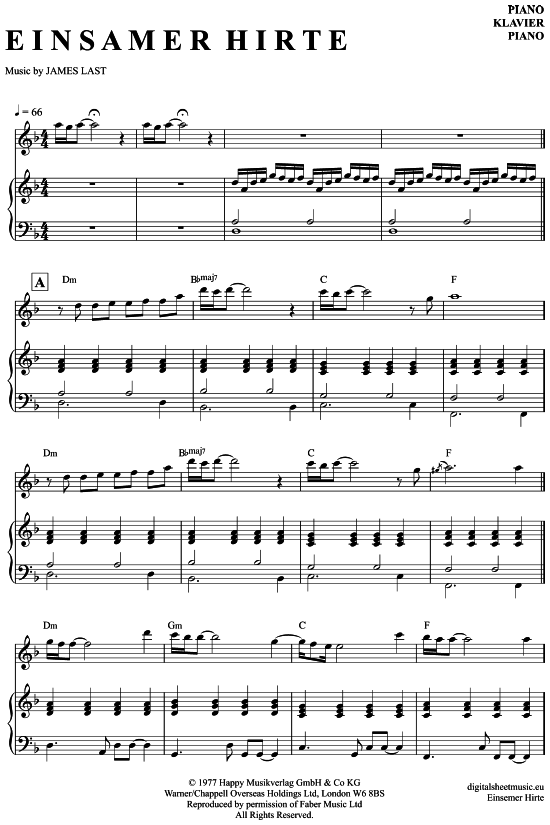
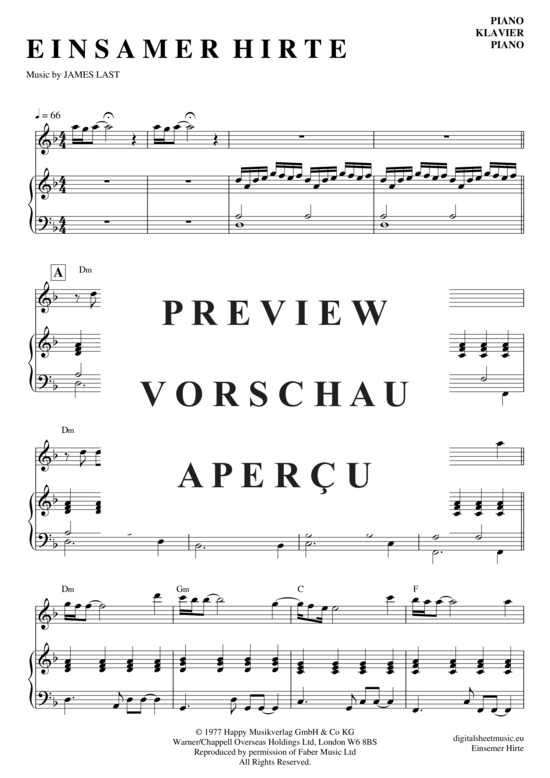
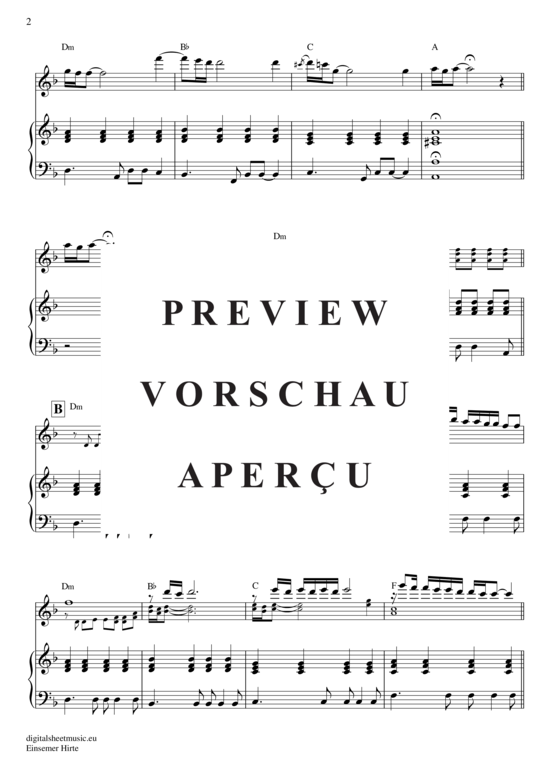
A scrollable preview of four pages shows exactly what to expect before purchasing — no leap of faith required. For those who wish to rehearse the piece with accompaniment: a playback track is available for purchase, with or without the melody line — ideal for working on intonation and phrasing in context. A short demo audio sample is available free of charge. Sheet music is available for immediate download after purchase. 100% licensed — ready to perform legally, right away.
Editorially reviewed by the notendownload.com team
Product Reviews
8 April 2025 20:44
Alles SUPER weiter so.
Bin kein Profispieler aber doch schon geübt. Der Schwierigkeitsgrad ist so für meinen Spiellevel so OK, sollte eigentlich für jeden der mit Akkorden etwas umgehen kann zu meistern sein. Ich spiele seit 2 Jahren Keyboard nach ca. 3 Stunden üben konnte ich es spielen. Mit entsprechender Keyboardregistrierung klingt das Stück nahe am Original. Spiellevel könnte für mich etwas höher sein, bin aber sehr zufrieden, weiter so.