

 Orders
 Addresses
 Payment methods



Details
| Product number: | mfgt078ss pdf |
|---|---|
| Arrangement: | Orchestra |
| Genre: | Concert work |
| Language: | French |
| Tempo: | Allegro |
| Authors: | Tailleferre, Germaine (1906-1983) |
| Pages: | 63 |
| duration: | 11:30 |
| Publisher: | Musik Fabrik Music Publishing |
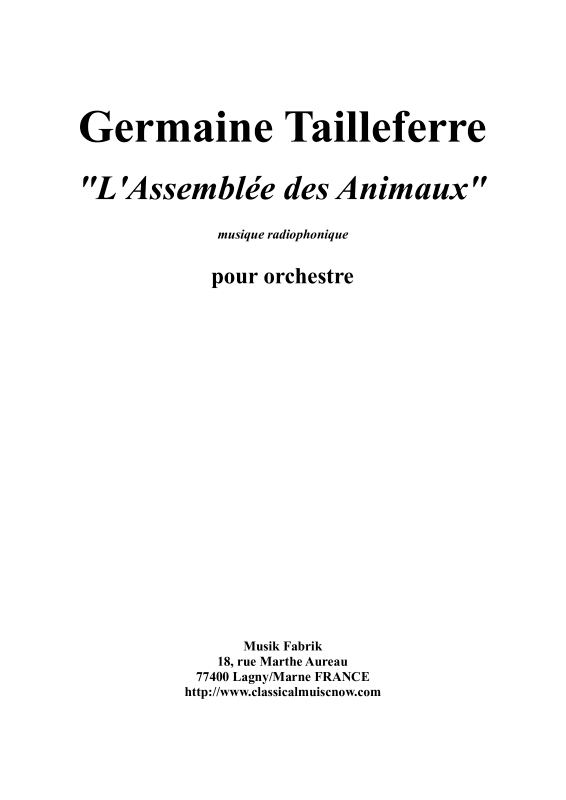
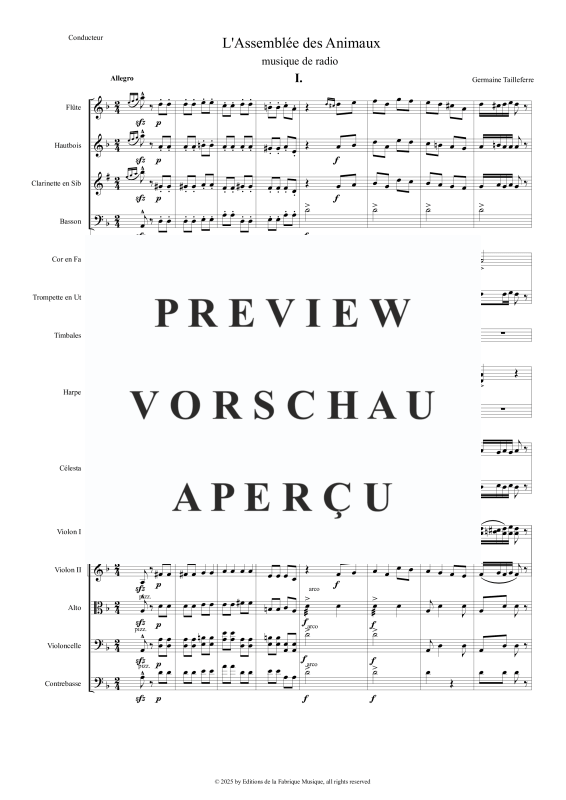
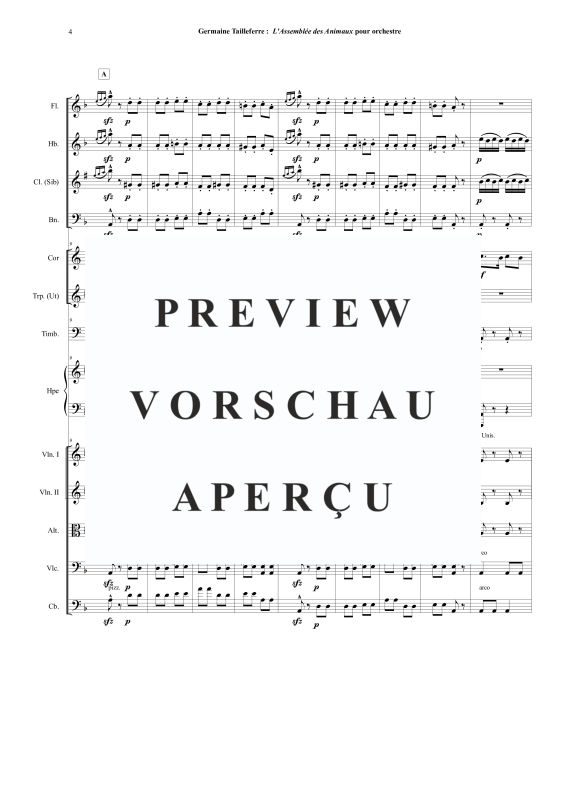
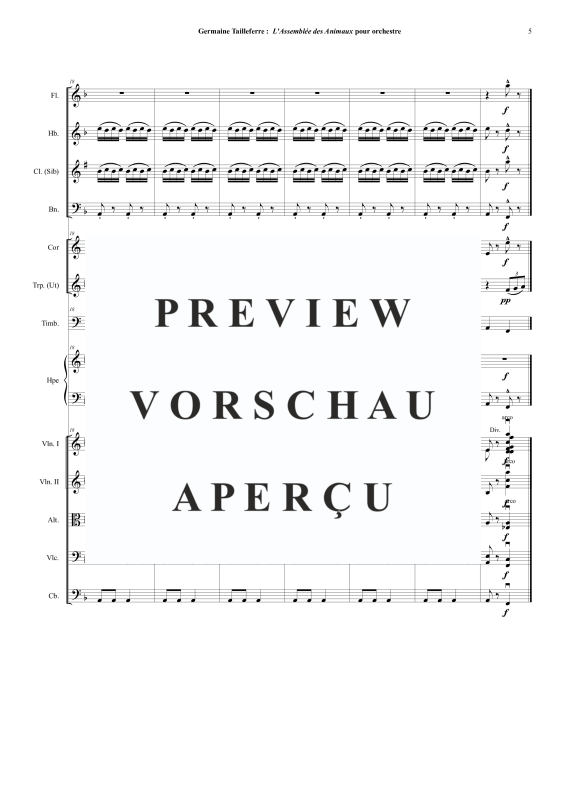
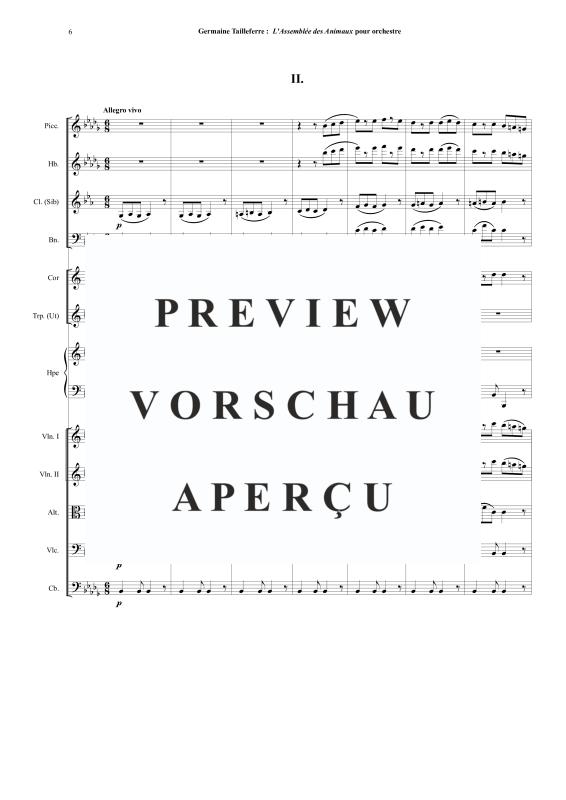
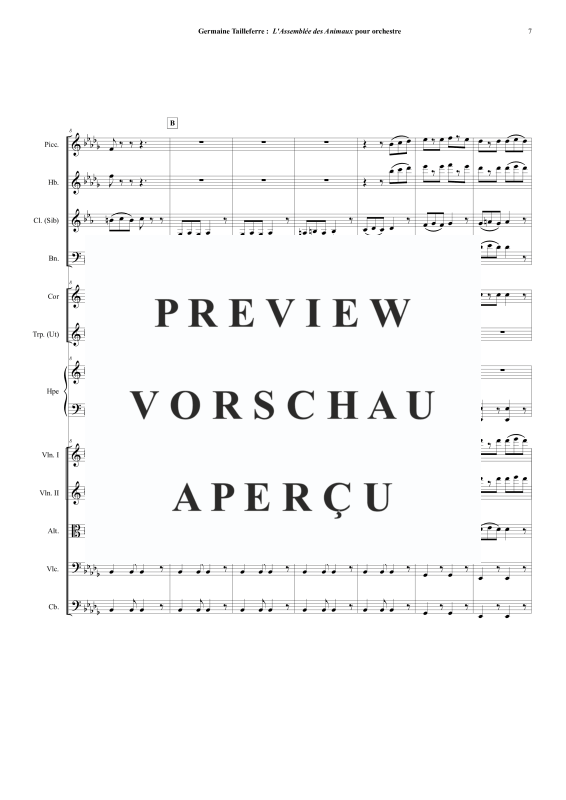
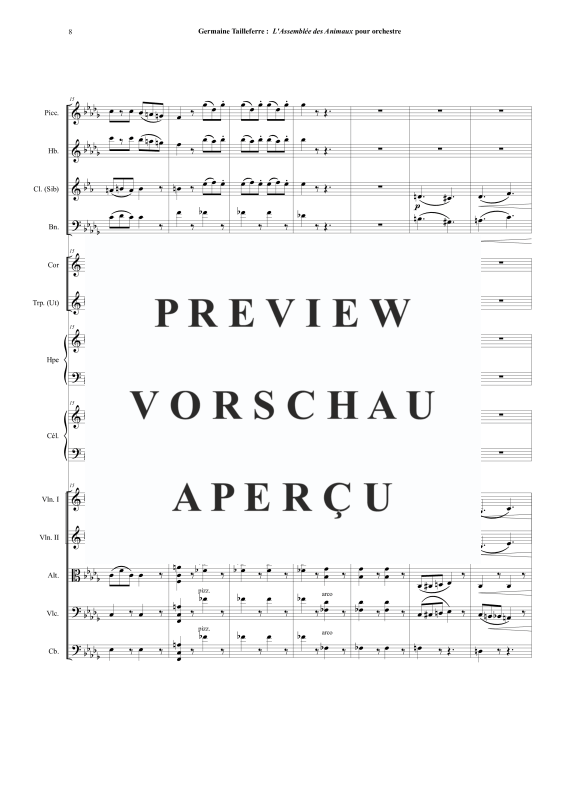
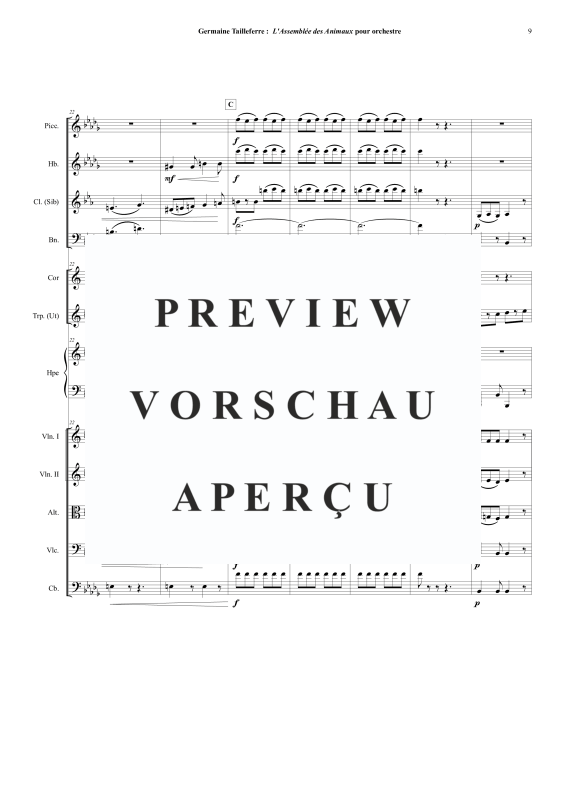
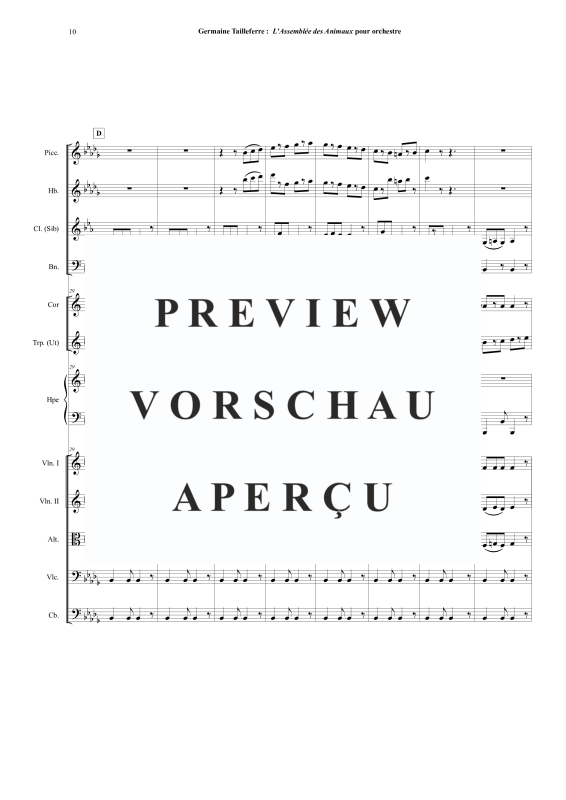
Assemblée des Animaux - Sheet Music for Orchestra Germaine Tailleferre







 100% Legal & Licensed
 Verified by Musicians
 No Subscription. One-Time Purchase.
 Instant Download after Purchase
Details
| Product number: | mfgt078ss pdf |
|---|---|
| Arrangement: | Orchestra |
| Genre: | Concert work |
| Language: | French |
| Tempo: | Allegro |
| Authors: | Tailleferre, Germaine (1906-1983) |
| Pages: | 63 |
| duration: | 11:30 |
| Publisher: | Musik Fabrik Music Publishing |
Product Description
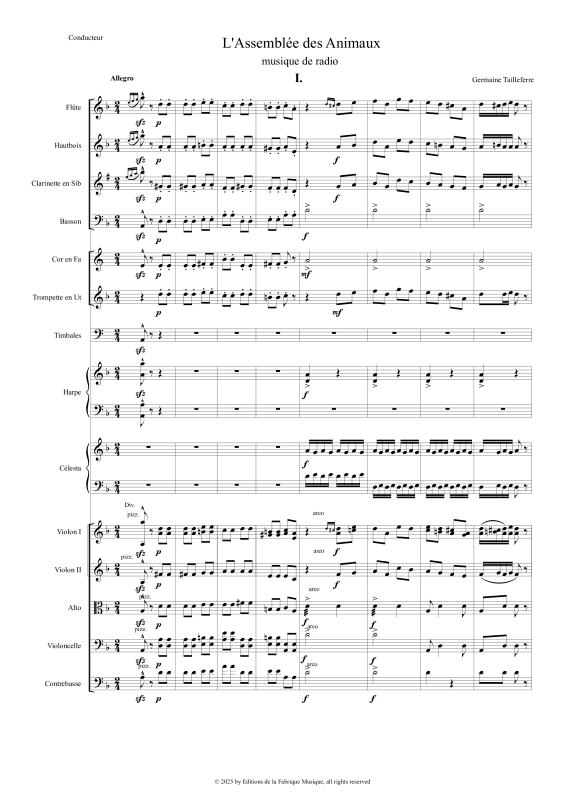
Germaine Tailleferre composed L'Assemblée des animaux for a radio play produced and broadcast by French radio. The text is by Marianne Oswald (1901–1985), singer, actress, and radio producer, to whom the score is dedicated. The manuscript bears a SACEM deposit stamp dated April 15, 1952. The work belongs to a small group of radio pieces that Tailleferre wrote in a cabaret-influenced, popular idiom during this period – including also Ici la Voix (text by Georges Hugnet) – an aspect of her work that differs from her better-known concert and chamber music.
The subject of the piece – an assembly of the animals of the world that comes together to point out to mankind its failure to secure lasting peace – closely follows the premise of Erich Kästner's 1949 anti-war fable for children, Die Konferenz der Tiere, written immediately after World War II at the instigation of Jella Lepman. Notably, no French translation of Kästner's novel was published until 1980 (Gallimard), nearly three decades after the deposit of this score. Oswald's text for Tailleferre must therefore represent an independent adaptation of the German original – whether directly from Kästner's text or freely reworked for French radio – and not a setting of a published French edition.
The score deviates from Kästner's novel in its resolution: whereas the book ends with the animals forcing the world's statesmen to a peace treaty through the abduction of their children, Tailleferre's setting ends with the appearance of a character named Martine, to whom the children's choir sings a closing hymn, suggesting that Martine – rather than the collective action of the animals – resolves the central conflict of the drama. Martine does not appear in Kästner's novel and was almost certainly Oswald's own invention: a child protagonist who represents the young radio audience itself – a device fitting for a producer who two years later would create and host the children's radio program Terre des enfants (Paris-Inter, 1954). The name itself was in 1952 a common and appealing choice for a French girl character, came slightly before, but anticipated the popularity of the Martine book series (from 1954).