

 Orders
 Addresses
 Payment methods



Details
| Product number: | BC024 pdf |
|---|---|
| Arrangement: | Duet |
| Instruments: | Piano , Tuba |
| Genre: | Romantic |
| Era: | 19. Jahrhundert |
| Duet: | Piano & Tuba |
| Authors: | Concone , Giuseppe (1810-1861) |
| Pages: | 32 |
| arrangers: | Cummings , Barton |
| Publisher: | Solid Brass Music |
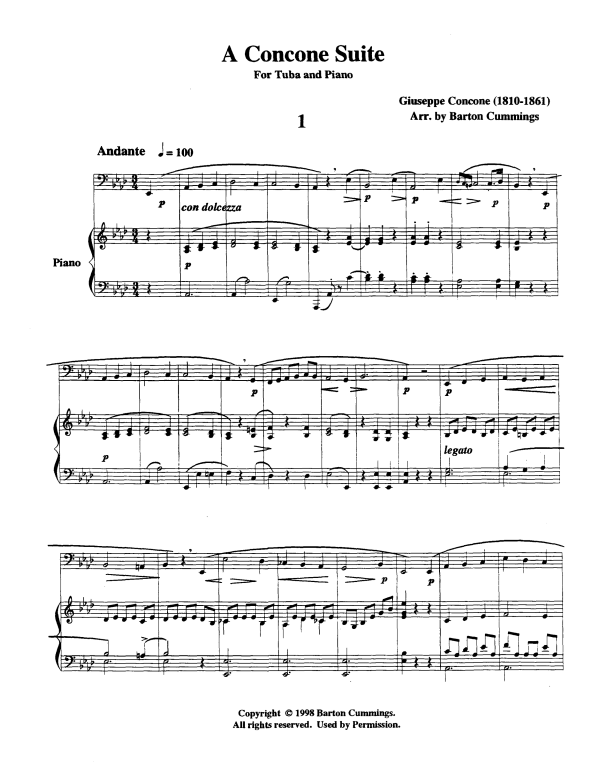
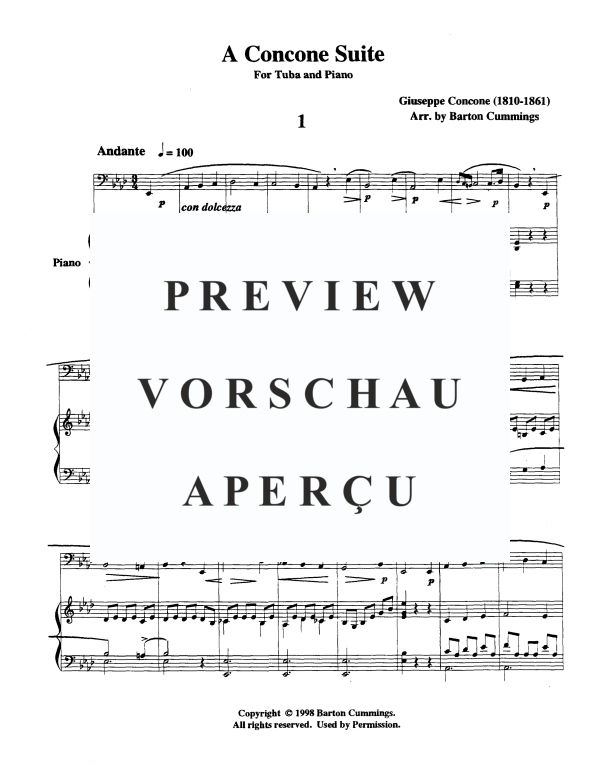
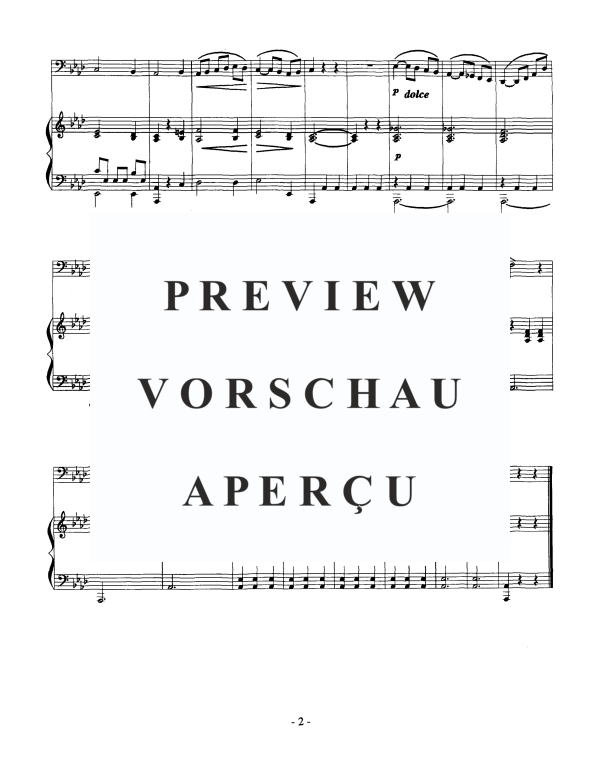
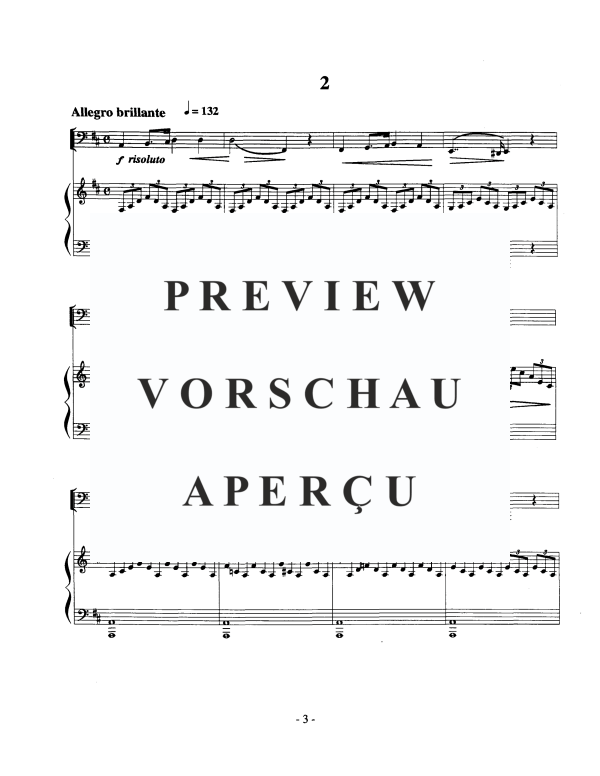
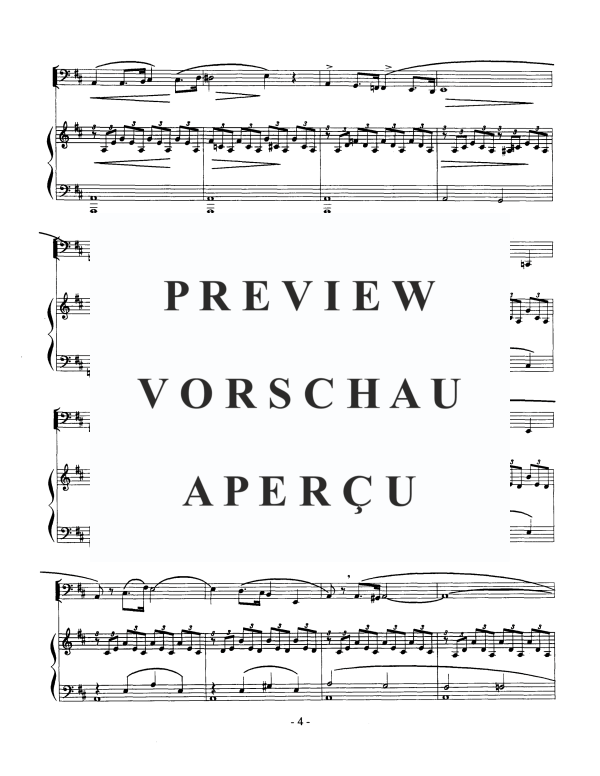
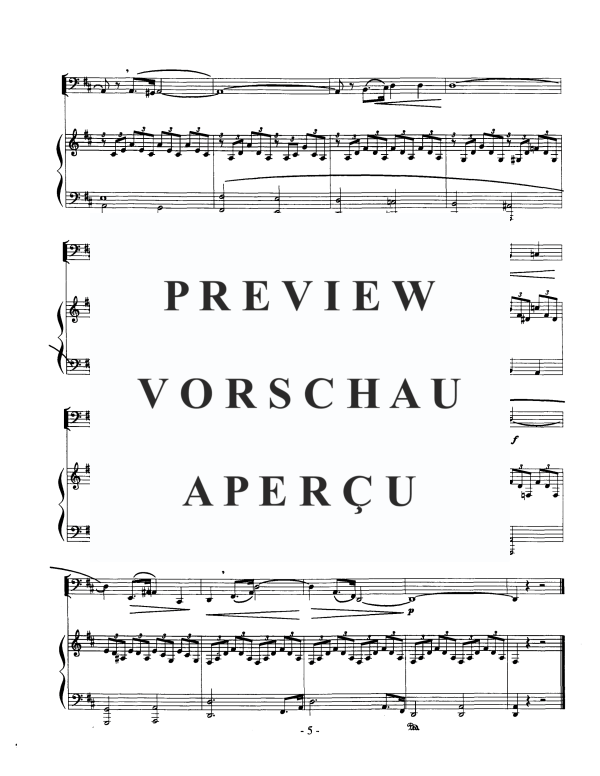
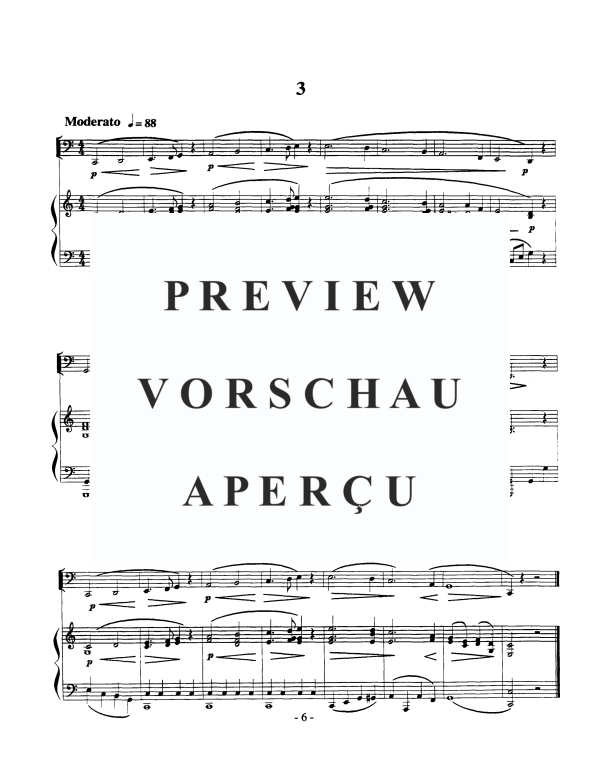
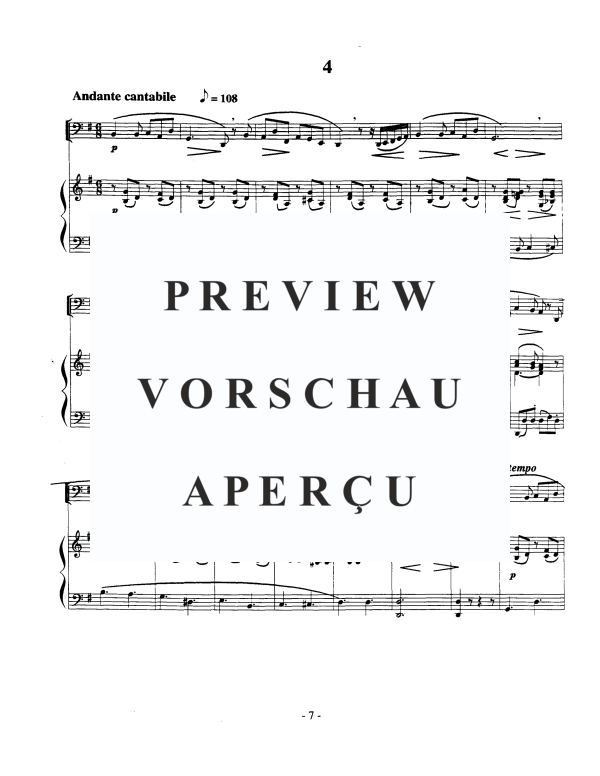
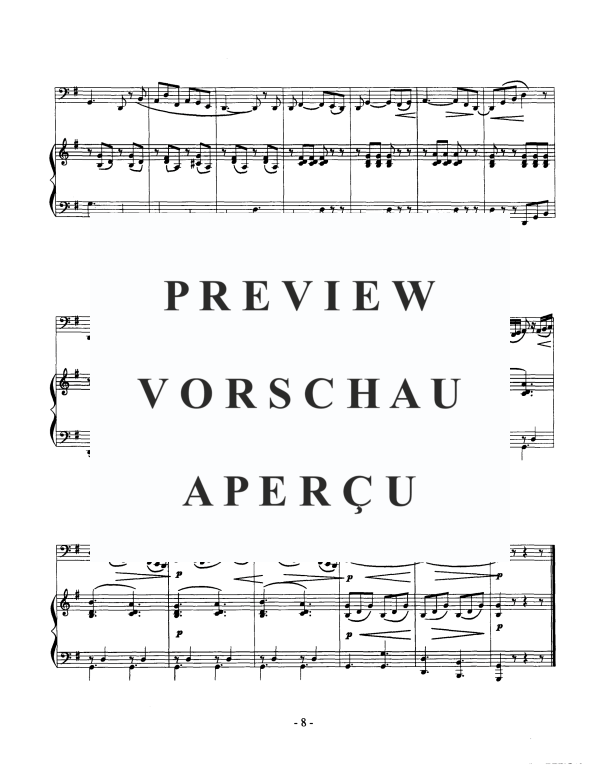
A Concone Suite - Sheet Music for Tuba and Piano Guiseppe Concone








 100% Legal & Licensed
 Verified by Musicians
 No Subscription. One-Time Purchase.
 Instant Download after Purchase
Details
| Product number: | BC024 pdf |
|---|---|
| Arrangement: | Duet |
| Instruments: | Piano , Tuba |
| Genre: | Romantic |
| Era: | 19. Jahrhundert |
| Duet: | Piano & Tuba |
| Authors: | Concone , Giuseppe (1810-1861) |
| Pages: | 32 |
| arrangers: | Cummings , Barton |
| Publisher: | Solid Brass Music |
Product Description
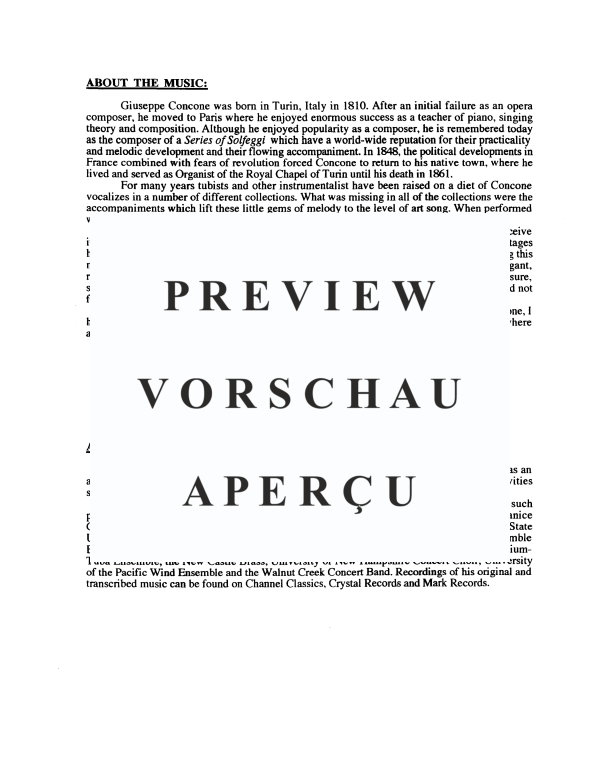
Giuseppe Concone was born in 1810 in Turin, Italy. After initial failures as an opera composer, he moved to Paris, where he achieved great success as a teacher of piano, voice theory, and composition.
Although he was popular as a composer, he is remembered today primarily as the author of a series of solfeggio exercises that are known worldwide for their practical application, their melodic development, and their fluid accompaniment.
In 1848, political developments in France combined with revolutionary fears forced Concone to return to his hometown, where he lived until his death in 1861 and worked as an organist at the Royal Chapel of Turin.
For many years, tuba players and other instrumentalists have grown up with Concone vocalises from a variety of different collections. What was missing from all these collections were the accompaniments that elevate these small melodic gems to the level of an art song.
When performed with accompaniment, they can be used as a suite for any performance situation. Performers should not rush to judge this music if they initially have the impression that it does not correspond to a virtuosic level.
Remember: the greatest singers who ever graced the great stages learned their art through this music. One of the main reasons for studying and performing this music is the development of a sense of style as well as the ability to play broadly, elegantly, rhythmically, and with long decay – something that is often lacking in tuba players.
While some of the etudes allow for a certain articulation, in general these are legato etudes that do not serve the development of articulation.
Since we play differently today than the performers did in Concone's time, I have taken the liberty of adding expressive and phrasing indications as well as dynamic and tempo markings at appropriate places – solely in the interest of a more musical performance of this music.